There is something almost otherworldly about a lotus flower rising from murky water, opening its petals to face the sun as if nothing in the world could hold it down. But here is what most people do not realize: the color of that lotus is not just a visual detail. It is a language. It carries meaning, symbolism, cultural weight, and in many traditions, spiritual significance that goes back thousands of years. If you have ever stood before a purple lotus flower and a blue lotus flower and wondered whether they are really all that different, this article is going to change the way you see them forever.
What Is the Lotus Flower and Why Does Its Color Matter?
The lotus flower, known scientifically as Nelumbo nucifera (for the pink and white varieties) and Nymphaea caerulea (for the blue Egyptian lotus), has been a sacred symbol across Asian, Egyptian, and South Asian cultures for millennia. It grows in shallow, muddy water and yet produces one of the most pristine and elegant blooms in the natural world. That contrast alone made it a powerful symbol of purity, rebirth, and spiritual awakening.
But within that symbolism, color creates entirely different stories. A red lotus speaks of the heart. A white lotus signals purity of mind. A pink lotus is tied to the divine. And when it comes to purple versus blue lotus flowers, the differences go far deeper than shade on a color wheel.
The Blue Lotus Flower: Ancient, Mystical, and Misunderstood
Origins and Botanical Identity
The blue lotus flower most commonly referenced in history is Nymphaea caerulea, the Egyptian blue lotus. It is not technically a true lotus but rather a water lily, though centuries of cultural and religious usage have earned it the lotus title. Found flourishing along the Nile River, this flower was central to ancient Egyptian spiritual practice, art, and even recreational use.
In ancient Egypt, the blue lotus was everywhere. It appeared on tomb walls, in medical papyri, and in religious ceremonies dedicated to the sun god Ra and the god of creation, Nefertem, who was often depicted rising from a blue lotus at the beginning of time. The flower was believed to have psychoactive and euphoric properties, and modern research has confirmed that it contains aporphine and nuciferine, compounds that act on dopamine receptors and may produce mild sedative and euphoric effects.
Blue Lotus in Buddhist Tradition
In Buddhist symbolism, the blue lotus, known in Sanskrit as Utpala, represents the triumph of wisdom and knowledge over ignorance. It is associated with Manjushri, the bodhisattva of wisdom, and is depicted in a semi-open form, suggesting that enlightenment is always in a state of becoming rather than fully achieved. The blue lotus does not stand for a destination. It stands for the journey toward clarity and understanding.
This is why the blue lotus carries such an intellectual energy in Buddhist iconography. It is the flower for the seeker, the thinker, the person who questions the world and does not accept surface-level answers.
What the Blue Lotus Symbolizes at a Glance
The blue lotus flower meaning centers on wisdom, knowledge, intelligence, and the pursuit of truth. It speaks to the rational mind while still honoring the spiritual path. It is the color of the sky and the ocean, both of which carry connotations of vastness, depth, and things that extend beyond ordinary reach. If you are drawn to the blue lotus, chances are you value understanding above comfort.
The Purple Lotus Flower: Spiritual Royalty and Mystical Power
What Makes the Purple Lotus Unique
The purple lotus flower occupies a fascinating space in the symbolic landscape. Purple itself is a color that has long been associated with royalty, mystery, and the merging of the physical and the spiritual. It is what you get when you combine the grounded, passionate energy of red with the calm, expansive energy of blue. In the case of the lotus, this means the purple variety carries a sense of esoteric wisdom, mystical understanding, and spiritual authority.
The purple lotus is most commonly linked to Esoteric Buddhism and certain Tantric traditions, where it is considered the most spiritually elevated of all lotus varieties. It is often depicted with eight petals, which in Buddhist cosmology represent the Noble Eightfold Path, the road to liberation from suffering as taught by the Buddha.
Purple Lotus in Spiritual Practice
In meditation and mindfulness traditions, the purple lotus is used as a visualization tool for practitioners who are working through deeper layers of consciousness. Unlike the blue lotus, which encourages intellectual seeking, the purple lotus invites surrender. It is for those who have moved beyond asking questions and are learning to sit with mystery.
This is the flower of the mystic, not the philosopher. Where the blue lotus says “understand,” the purple lotus says “trust.” Many practitioners of Tibetan Buddhism use the image of a purple lotus in their visualizations during tantric meditation, believing that its color holds a vibrational frequency that helps dissolve the boundary between the self and the infinite.
Purple Lotus and the Crown Chakra
In chakra philosophy, the purple lotus is directly connected to the Sahasrara, or crown chakra, located at the top of the head. This chakra governs spiritual connection, cosmic awareness, and the experience of unity consciousness. The color associated with this chakra is violet or purple, making the purple lotus a natural emblem of its energy. When someone meditates on the purple lotus, they are essentially meditating on their own highest spiritual potential.
Purple vs Blue Lotus: A Direct Comparison
Symbolism and Core Meaning
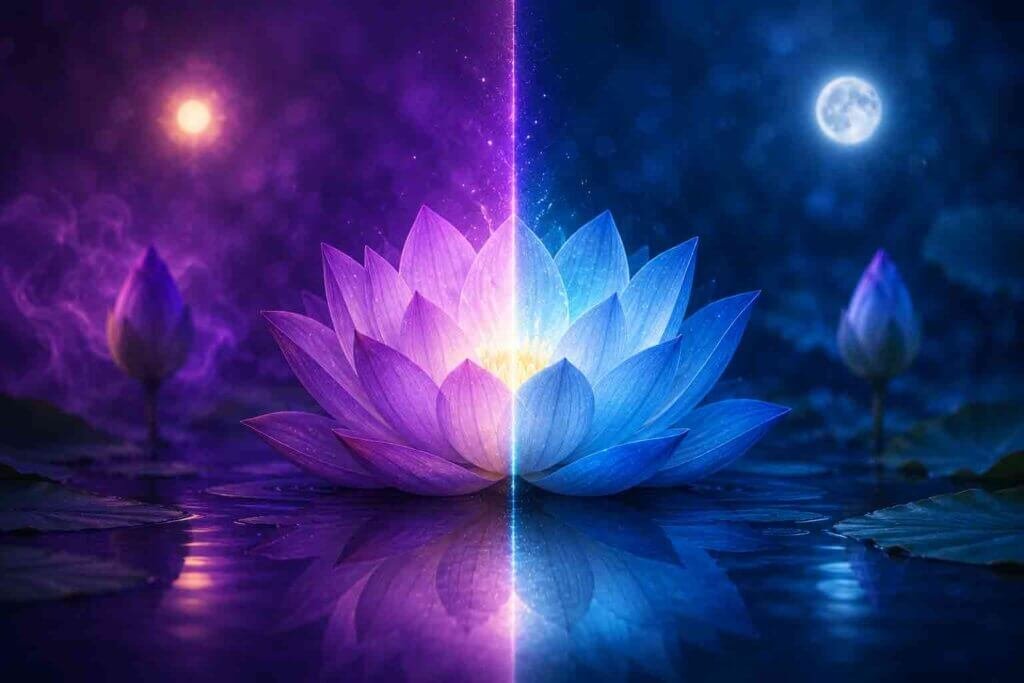
The most important distinction when looking at purple vs blue lotus flower meaning is this: the blue lotus represents the mind on its way to enlightenment, while the purple lotus represents the soul at the threshold of transcendence. One is about the journey of understanding. The other is about the experience of being.
Blue lotus speaks to wisdom, learning, and the intellectual aspects of spiritual life. Purple lotus speaks to mystery, spiritual authority, and the deepest layers of consciousness that go beyond thought altogether.
Cultural and Religious Associations
The blue lotus is most prominently featured in ancient Egyptian religion and early Buddhist tradition. The purple lotus, by contrast, is more strongly associated with Esoteric Buddhism, Tibetan Buddhism, and mystical spiritual practices. Both appear in Hindu imagery, but the purple lotus holds a more exalted position in traditions that emphasize transcendence over learning.
Aesthetic and Visual Differences
From a purely botanical standpoint, the colors themselves create a different visual experience. The blue lotus has a cooler, more calming presence. Looking at it evokes a sense of stillness, depth, and clarity. The purple lotus, with its warmer undertones and richer saturation, commands attention in a different way. It feels like something rare, something sacred, something that should not be taken lightly.
In garden design and floral arrangements, the blue lotus tends to pair well with whites and silvers, creating a serene, meditative atmosphere. The purple lotus pairs beautifully with golds and deep greens, creating something that feels ceremonial and reverent.
Which Lotus Color Is Right for You?
Choosing Based on Personal Intention
If you are drawn to the lotus flower for personal, spiritual, or decorative reasons, the color you choose should reflect what you are seeking in your own life. There is no wrong answer, but there is a right answer for you specifically.
If you are going through a period of learning, questioning, or intellectual growth, the blue lotus is your ally. It will support your curiosity and remind you that wisdom comes through honest inquiry.
If you are going through a period of deep spiritual work, healing, or transformation that feels bigger than your mind can fully process, the purple lotus is calling you. It honors the parts of your journey that cannot be explained, only experienced.
Using Lotus Colors in Home and Sacred Spaces
Many people incorporate lotus imagery into their homes, meditation rooms, and sacred spaces. Understanding the color distinction helps you make intentional choices. A blue lotus painting or sculpture in a study or reading room reinforces the energy of focused learning and clear thinking. A purple lotus in a meditation space or altar deepens the atmosphere of spiritual reverence and inner work.
Both colors hold tremendous power when used with awareness. The mistake most people make is choosing purely based on which color looks pretty without considering what energy they actually need in their lives right now.
The Blue and Purple Lotus in Modern Wellness Culture
Lotus Symbolism in Yoga and Mindfulness
The lotus flower has become one of the most popular symbols in modern yoga and wellness culture, appearing on clothing, mats, studio logos, and meditation apps. While the pink lotus is perhaps the most common, the blue and purple varieties have carved out their own meaningful niches.
In yoga philosophy, the lotus posture itself, Padmasana, is considered the ideal seated position for meditation because it mirrors the flower’s ability to rise above murky water. When practitioners choose blue or purple lotus imagery, they are often making a conscious statement about their spiritual aspirations, whether that is intellectual clarity or deep mystical connection.
Blue Lotus as a Botanical Supplement
An interesting modern development is the growing interest in blue lotus as an herbal supplement. The Nymphaea caerulea plant has seen a significant rise in popularity among those interested in natural wellness, lucid dreaming, and relaxation. Available in teas, tinctures, and extracts, the blue lotus is being explored for its potential to support relaxation and vivid dreaming, though it is important to approach any botanical supplement with proper research and guidance from a qualified healthcare professional.
The purple lotus does not carry this same supplemental tradition, remaining primarily a symbol within spiritual practice rather than a botanical remedy.
The Deeper Spiritual Message Both Colors Share
Despite their differences, the blue and purple lotus flowers share a foundational message that transcends their individual symbolism. They both grow from the mud. They both rise through murky water. And they both open into something breathtaking.
This shared origin is perhaps the most profound teaching of all. Whether you are on the path of wisdom or the path of transcendence, you begin in the same place as everyone else, in the messiness of ordinary life. The color your lotus blooms into simply tells the story of where your particular path is taking you.
Both colors remind us that transformation is not about escaping difficulty. It is about rising through it with grace.
Conclusion: Color Is Never Just Color
The choice between a purple lotus and a blue lotus is not a trivial aesthetic decision. It is a reflection of where you are on your spiritual and personal journey. The blue lotus asks you to think deeply, question honestly, and pursue wisdom with a courageous mind. The purple lotus asks you to surrender to what cannot be understood, only felt, and to trust the parts of life that live beyond the reach of explanation.
Whether you are choosing lotus imagery for your home, your meditation practice, your tattoo, or simply trying to understand the symbolism you encounter in art and spiritual texts, knowing the difference between these two extraordinary flowers gives you a richer, more meaningful relationship with one of the world’s oldest and most powerful symbols. The color of your lotus changes everything because it speaks the language of your soul. And your soul already knows which one it is reaching for.
Frequently Asked Questions
Q1: What is the main difference between a purple and blue lotus flower?
The blue lotus symbolizes wisdom and intellectual enlightenment, while the purple lotus represents mystical transcendence and deep spiritual awareness. They share the same roots but point in different spiritual directions.
Q2: Which lotus color is better for meditation?
Both work beautifully, but it depends on your intention. Use the blue lotus to sharpen mental clarity and focus, and the purple lotus when you want to deepen spiritual connection and inner surrender during meditation.
Q3: Is the blue lotus flower real or just symbolic?
It is very much real. Nymphaea caerulea, the Egyptian blue lotus, is an actual water plant that was used in ancient Egyptian ceremonies and is still used today in herbal wellness practices for its naturally calming properties.
Q4: What chakra is the purple lotus associated with?
The purple lotus is directly connected to the crown chakra (Sahasrara), which governs spiritual consciousness, cosmic awareness, and the sense of connection to something greater than the individual self.
Q5: Can I use both blue and purple lotus symbols together?
Absolutely. Many practitioners combine both colors to honor the full spiritual journey, pairing the blue lotus’s pursuit of wisdom with the purple lotus’s invitation to surrender and transcend. Together they create a beautifully complete spiritual story.
Q6: Which lotus color is most sacred?
Different traditions honor different colors. In Buddhism, the pink lotus is most closely associated with the Buddha himself. The purple lotus is considered most sacred in Esoteric and Tantric Buddhist traditions. The blue lotus holds its own sacred status in both Egyptian religion and mainstream Buddhist practice.