
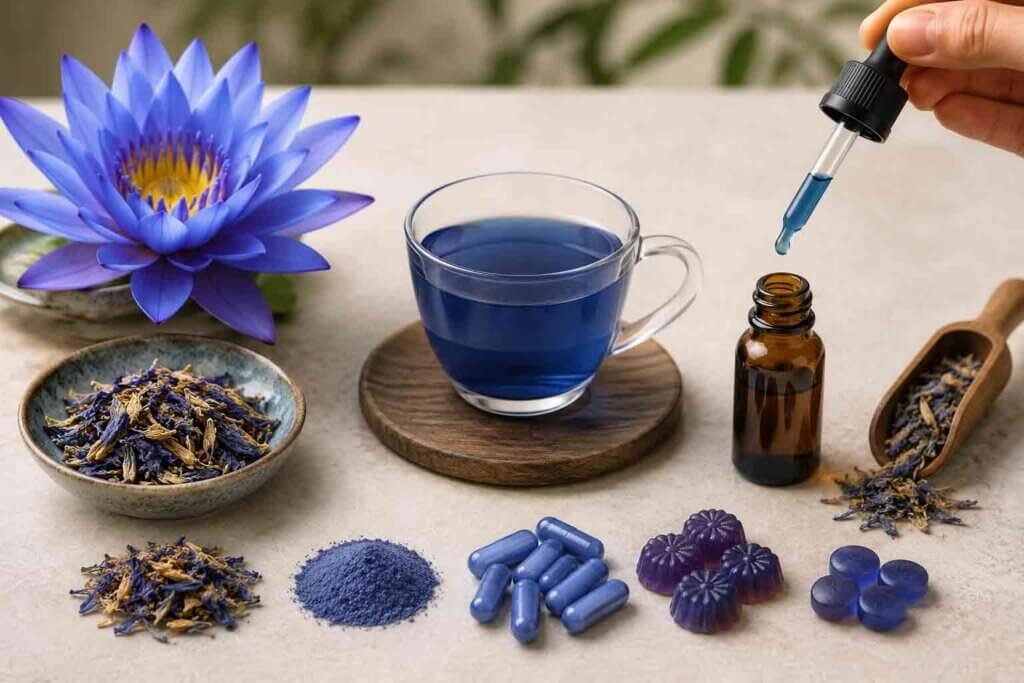
Blue lotus (Nymphaea caerulea) has moved well beyond the shelves of specialty herb shops. The Egyptian water lily that ancient priests and pharaohs once used in sacred rituals is showing up in teas, tinctures, gummies, and vapes across the modern wellness market. Searches for blue lotus dosage have grown steadily since 2023, driven by people curious about its reputation for calm, mild euphoria, and vivid dreams — but unsure where to start.
The problem: there are no FDA-approved dosing guidelines. No clinical trials have established a standard therapeutic dose for humans. What exists instead is a body of traditional use, pharmacological research on its two key alkaloids, and a growing library of user experience data. This guide synthesizes all three to give you the clearest, most practical blue lotus dosage reference available — broken down by consumption method, experience level, and intended effect.
Medical disclaimer: Blue lotus is not approved for human consumption in the United States and is not regulated by the FDA. This article is for informational purposes only and does not constitute medical advice. Always consult a qualified healthcare provider before adding any psychoactive substance to your routine, especially if you take medications or have underlying health conditions.
What Makes Blue Lotus Psychoactive?
Before dosing, it helps to understand what you’re actually taking.
Blue lotus contains two primary alkaloids responsible for its psychoactive effects: apomorphine and nuciferine. Apomorphine is a non-selective dopamine receptor agonist that also acts as a partial agonist at 5-HT1A serotonin receptors and an antagonist at 5-HT2A receptors. It’s actually one of the oldest anti-Parkinson’s compounds identified, and has been studied for conditions ranging from depression to erectile dysfunction.
Nuciferine works differently. It acts as a partial agonist at D2 and D5 dopamine receptors and also antagonizes serotonin 5-HT2A receptors — a pharmacological profile that resembles some atypical antipsychotic drugs. Together, these two alkaloids produce the characteristic “lotus effect”: warmth, relaxation, a soft lift in mood, and for some, enhanced dream states.
Here’s a critical technical point that most dosage guides miss: apomorphine is water-soluble, but nuciferine is not. This means that if you make blue lotus tea using only hot water, you are primarily extracting apomorphine. Nuciferine — arguably the more nuanced and relaxation-forward compound — requires an alcohol solvent to be extracted effectively. This is why alcohol-based tinctures and wine infusions tend to produce a noticeably fuller, more complete effect profile than plain tea.
Factors That Affect Your Ideal Dose
There is no universal dose that works the same way for every person. Several variables shape how much blue lotus you actually need:
Body weight and metabolism. Heavier individuals or those with faster metabolic rates may require slightly more to notice effects, though the relationship isn’t perfectly linear. Start conservatively regardless.
Individual sensitivity. Dopaminergic and serotonergic sensitivity varies significantly from person to person. Some individuals feel clear effects at 1 gram of dried flower; others need 5–6 grams to cross a noticeable threshold.
Tolerance. First-time users almost always have the lowest tolerance. Regular use can build tolerance quickly, which is why experienced users recommend cycling — taking breaks of several days between sessions to keep sensitivity intact.
Consumption method. This may be the single biggest variable. A 2-gram dose behaves very differently depending on whether it’s brewed as tea, taken as an alcohol tincture, or consumed as a concentrated 10:1 extract. Form determines bioavailability.
Extraction quality. Not all commercial products are equal. Some “blue lotus” products on the market have been found to contain little to no active alkaloids, or — more concerning — have been adulterated with synthetic cannabinoids. Seek brands that provide third-party lab testing.
Setting and intention. Blue lotus effects are sensitive to context. The same dose taken in a noisy, distracted environment often produces underwhelming results compared to the same dose taken in a calm, intentional setting with dim lighting or relaxing music.
Blue Lotus Dosage by Consumption Method
Dried Flowers — Tea
Tea is the most traditional preparation method and the gentlest introduction to blue lotus. Given that hot water primarily extracts apomorphine (the more stimulating of the two alkaloids), tea tends to produce lighter effects than other preparations.
Standard dosing for dried flower tea:
| Experience Level | Dried Flower Amount | Steep Time |
|---|---|---|
| Beginner | 1–2 grams (about 1 tsp) | 10–15 minutes |
| Intermediate | 3–5 grams | 10–15 minutes |
| Experienced | 5–10 grams | 15 minutes |
Use water heated to around 80–90°C (176–194°F) rather than a full rolling boil, which may degrade some alkaloids. Steep covered to trap volatile compounds. Adding honey or lemon is common; lemon juice may slightly improve extraction due to mild acidity.
Onset: 20–45 minutes after finishing the cup. Duration: 2–4 hours typically.
For those who want to extract both apomorphine and nuciferine through tea, a wine infusion — steeping dried flowers in red wine for several hours at room temperature — has been used historically and is still referenced in traditional preparation guides.
Tinctures
Tinctures are alcohol-based extracts that concentrate the active alkaloids and allow for sublingual (under-the-tongue) dosing, which speeds up absorption significantly. Because they use alcohol as the solvent, tinctures extract both apomorphine and nuciferine, giving you a more complete alkaloid profile than hot water alone.
Standard dosing for blue lotus tincture:
| Experience Level | Dose | Notes |
|---|---|---|
| Beginner | 5–10 drops | Hold under tongue 30–60 sec before swallowing |
| Intermediate | 10–20 drops | Can mix into water or tea |
| Experienced | 20–30 drops | Monitor effects carefully |
Effects from sublingual tincture typically begin within 15–20 minutes and can last several hours. Start at the lower end of any range, then wait a full hour before considering whether to take more.
The concentration of your tincture matters enormously. A 1:1 tincture (1 gram of flower per 1ml of liquid) behaves very differently from a 50:1 concentrate. Always check the ratio on your product label and adjust accordingly.
Capsules
Capsules offer a controlled, predictable dose without the preparation involved in tea or the taste of tincture. They pass through the digestive system before absorption, which delays onset but can extend duration.
Standard dosing for blue lotus capsules:
| Experience Level | Dose |
|---|---|
| Beginner | 250–400 mg |
| Intermediate | 400–600 mg |
| Experienced | 600–1,000 mg |
Onset is the slowest of all methods — typically 45 minutes to 2 hours. This delay is one of the most common reasons people accidentally overdose on edible cannabis and other oral herbal preparations. Take your dose, wait at least 90 minutes before deciding it “isn’t working,” and do not redose impulsively.
Extracts and Resins
Concentrated extracts (commonly labeled 5:1, 10:1, 20:1) are significantly more potent than raw dried flowers. A 10:1 extract means 10 grams of dried flower material was used to produce 1 gram of extract, so the active compound concentration is roughly 10 times higher per gram.
Because of this potency multiplication, extracts require the smallest physical doses and carry the highest risk of overconsumption for new users.
Standard dosing for 10:1 extract:
| Experience Level | Dose |
|---|---|
| Beginner | 100–200 mg |
| Intermediate | 200–400 mg |
| Experienced | 400–600 mg |
Adjust these figures proportionally if your extract has a different ratio. If your product is a 20:1 extract, halve the doses above. If it’s a 5:1, you can dose slightly higher.
Dosage by Desired Effect
Beyond consumption method, what you want to experience also guides how much you should take:
For relaxation and mild mood lift: Lower doses across any method tend to work well here. Think 1–2 grams of dried flower tea, 5–10 drops of tincture, or 250 mg capsule. The effect should feel like a gentle unwinding — slightly warmer than baseline, reduced mental chatter, easy sociability.
For sleep support and deeper rest: Moderate doses taken 30–60 minutes before bedtime. The sedative effects of nuciferine make blue lotus genuinely useful as a sleep preparation for many users. Blue lotus pairs naturally with other sleep-supportive botanicals like valerian root, lemon balm, or chamomile.
For lucid dreaming and dream enhancement: This is one of the most commonly reported applications of blue lotus. Many users report more vivid, narrative-rich dreams when taking blue lotus before bed. Moderate doses in extract form tend to be most reliably associated with this effect. An alcohol-based tincture that captures nuciferine is generally preferred over plain tea for this purpose.
For meditation and mindfulness: Light-to-moderate doses during or before a meditation session. Blue lotus is not disorienting at normal doses — it tends to quiet mental noise rather than distort perception. The relaxing, inward-turning quality of the plant has been used in spiritual and ceremonial contexts for exactly this reason.
The “Start Low, Go Slow” Principle
Regardless of what you’ve read or what your experience with other botanicals looks like, the standard advice from both harm reduction experts and experienced users is consistent: begin with the lowest dose, wait for the full onset window before assessing, and only increase gradually across sessions — not within a single session.
Most “blue lotus doesn’t work” stories come from two causes: under-dosing (particularly with tea that only extracts half the alkaloid profile) and insufficient wait time before deciding to take more. Most “I took too much” experiences come from impatience during onset.
A practical first-session protocol:
- Use dried flowers or a tincture (rather than a concentrated extract) for your first experience
- Take the beginner dose for your chosen method
- Set a comfortable, calm environment where you don’t need to drive or perform demanding tasks
- Wait a full 60–90 minutes before evaluating effects
- Take notes on how you feel
- For your second session (at least 48 hours later), adjust based on what you observed
Safety: What You Need to Know Before Dosing
Blue lotus is generally considered low-risk when used responsibly by healthy adults at reasonable doses, but that doesn’t mean it’s risk-free.
Common side effects at higher doses include: mild dizziness, nausea (especially on an empty stomach), headache, and pronounced drowsiness. These typically resolve within a few hours.
Serious risk: CNS depressant combinations. Never combine blue lotus with alcohol, benzodiazepines, opioids, sleep medications, or other central nervous system depressants. The sedative effects can compound dangerously, with a potential risk of respiratory depression at high combinations. This is the most important safety rule for blue lotus.
Medication interactions. Blue lotus alkaloids interact with dopamine and serotonin receptors. If you take SSRIs, MAOIs, antipsychotics, dopamine agonists, or blood pressure medications, speak with a healthcare provider before using blue lotus. The receptor overlap creates a genuine interaction potential that shouldn’t be dismissed.
Who should avoid blue lotus:
- Pregnant or breastfeeding individuals (no safety data exists)
- Children and teenagers
- Anyone with liver, kidney, or serious psychiatric conditions
- People in recovery from substance use disorders
- Active-duty military personnel (blue lotus appears on the Department of Defense Prohibited Dietary Supplement Ingredients list)
Product quality risk. This is a practical concern that affects dosage accuracy: commercial blue lotus products vary dramatically in their actual alkaloid content. Some products contain little to no active compounds. Others — particularly vapes and gummies with “proprietary blends” — have been found in forensic testing to contain synthetic cannabinoids. Purchase from brands that provide third-party lab testing (Certificate of Analysis) and avoid mystery ingredient blends.
Frequency and tolerance management. Most experienced users recommend limiting blue lotus to 2–3 times per week at most, with regular breaks of several days or more to prevent tolerance buildup. The plant does not appear to be physically addictive, but psychological reliance on its calming effects is possible with daily use.
Quick-Reference Dosage Summary
| Form | Beginner | Intermediate | Experienced | Onset | Duration |
|---|---|---|---|---|---|
| Dried flower tea | 1–2 g | 3–5 g | 5–10 g | 20–45 min | 2–4 hrs |
| Tincture (standard) | 5–10 drops | 10–20 drops | 20–30 drops | 15–20 min | 3–5 hrs |
| Capsules | 250–400 mg | 400–600 mg | 600–1,000 mg | 45–120 min | 4–6 hrs |
| Extract (10:1) | 100–200 mg | 200–400 mg | 400–600 mg | 30–90 min | 4–6 hrs |
Frequently Asked Questions
How long does it take for blue lotus to kick in? Onset varies significantly by method. Sublingual tincture is fastest at 15–20 minutes. Tea falls in the 20–45 minute range. Capsules and oral extracts are slowest, with onset anywhere from 45 minutes to 2 hours. Always factor in this delay before deciding whether to take more.
Can you overdose on blue lotus? There is no established lethal dose for blue lotus in humans. However, exceeding reasonable doses — particularly via vaping or concentrated extracts — can produce significant nausea, dizziness, disorientation, and extreme sedation. Published case reports in military medicine contexts have documented symptoms serious enough to require medical evaluation at high doses, including confusion, slurred speech, and impaired motor function.
Is blue lotus legal? Blue lotus is legal in most of the United States (49 states). It is banned in Louisiana. Internationally, it is a controlled substance in Russia and Poland, and regulations vary elsewhere. Always verify local laws before purchasing.
Does blue lotus show up on a drug test? Blue lotus itself is not screened for in standard drug panels. However, adulterated products have been found to contain synthetic cannabinoids that do appear on drug tests. This is a particularly important warning for anyone subject to military or employment drug screening.
Can I combine blue lotus with other herbs? Many users combine blue lotus with complementary botanicals for specific purposes: valerian or lemon balm for deeper sleep, chamomile for added relaxation, or cacao (ceremonially) for a warmer, more heart-centered experience. Avoid combining with anything that increases CNS depression — especially alcohol, kava, or sedating medications.
Final Thoughts
Blue lotus occupies an unusual position in the botanical world: genuinely psychoactive, pharmacologically well-characterized at the compound level, yet almost entirely unstudied in human clinical trials. That gap means we’re working with traditional use patterns, user reports, and extrapolations from alkaloid pharmacology rather than the gold-standard clinical data we’d ideally want.
What that requires from you as a user is a methodical, patient approach. Start with a low dose. Choose a form that matches your experience level. Understand the extraction chemistry — especially the difference between water-soluble apomorphine and ethanol-soluble nuciferine — so you understand what your chosen preparation method is actually delivering. And respect the onset window before deciding whether your dose needs to be adjusted.
Used thoughtfully, blue lotus is a genuinely interesting botanical with a 3,000-year track record. Used impatiently or combined with contraindicated substances, it carries real risks. The difference between those two outcomes is almost entirely a function of how carefully you approach the dose.
Always consult a qualified healthcare professional before starting any new herbal supplement regimen. This content is for informational purposes only and does not constitute medical advice, diagnosis, or treatment.
Frequently Asked Questions
How much blue lotus tea should a beginner take?
Start with 1–2 grams of dried flowers steeped in hot water for 10–15 minutes. That’s roughly one teaspoon. Wait at least 45 minutes before deciding whether the dose was sufficient — tea has a slower onset than tinctures or extracts, and most first-timers take too much too soon simply because they don’t feel anything right away.
How long does it take for blue lotus to work?
It depends on how you take it. Sublingual tinctures kick in within 15–20 minutes. Tea typically takes 20–45 minutes. Capsules and oral extracts are the slowest, with onset ranging from 45 minutes to 2 hours. Always account for this window before taking more.
Can you take blue lotus every day?
It’s not recommended. Daily use builds tolerance quickly, which means you’ll need increasingly larger doses to feel the same effects. Most experienced users limit sessions to 2–3 times per week and take regular multi-day breaks to keep sensitivity intact.
What happens if you take too much blue lotus?
High doses — especially from concentrated extracts or vapes — can cause nausea, dizziness, disorientation, and heavy sedation. Published case reports have documented confusion and slurred speech at excessive doses. The effects are temporary but uncomfortable. The fix is straightforward: take less next time and never redose within the same session.
Is blue lotus safe to mix with alcohol?
No. This is the most important safety rule for blue lotus. Both substances depress the central nervous system, and combining them can amplify sedation to a dangerous degree. The same applies to benzodiazepines, opioids, and sleep medications. Always use blue lotus on its own.