
TL;DR — Key Takeaways
- The two active alkaloids in blue lotus — nuciferine and apomorphine — degrade rapidly when exposed to light, heat, oxygen, and humidity.
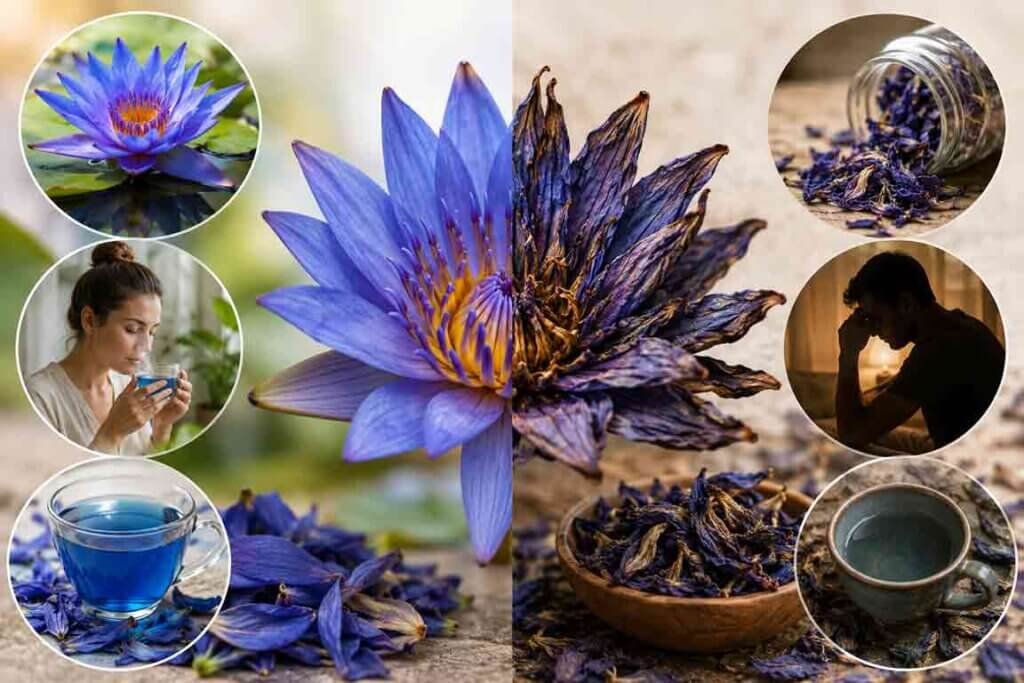
- Fresh, high-quality petals are deep indigo-blue to violet; degraded petals turn gray or brown and lose their sweet floral aroma.
- When stored correctly in airtight, opaque containers at cool temperatures, dried blue lotus petals remain potent for up to 2 years.
- Fresh petals brew a noticeably sweeter, more aromatic tea with stronger relaxation effects than stale alternatives.
- Always check for harvest date, batch CoA (Certificate of Analysis), and petal color before purchasing.
What Makes Blue Lotus Petals “Fresh” — and Why It Matters
Dried blue lotus petals (Nymphaea caerulea) are not inert plant material. They carry a carefully balanced cocktail of aporphine alkaloids — primarily nuciferine and apomorphine — that interact with dopamine and serotonin receptors to produce the plant’s signature calming, mildly euphoric effects. The moment those alkaloids begin to oxidize, the experience diminishes. Not subtly — noticeably.
Freshness is the single greatest factor separating a blue lotus product that delivers genuine relaxation, vivid dreams, and meditative calm from one that produces nothing but lukewarm herbal tea.
This guide explains exactly what happens to blue lotus alkaloids over time, how to identify fresh petals using your senses, how storage decisions compound or protect potency, and what questions every buyer should ask before purchasing.
The Science Behind Blue Lotus Alkaloids and Freshness
What the Active Compounds Actually Are
Nymphaea caerulea contains more than 20 identified alkaloids, according to research published in the Journal of Natural Products. The two that drive the experience are:
- Nuciferine — an aporphine alkaloid that acts as a dopamine receptor blocker. Research suggests it produces sedative, anxiolytic effects and can enhance analgesic responses by modulating how the nervous system processes discomfort signals.
- Apomorphine — a nonselective dopamine agonist that creates the uplifted, euphoric counterbalance to nuciferine’s calming effects. It is the same compound used clinically to treat Parkinson’s disease due to its direct action on dopamine receptors.
Together, these two alkaloids create what users consistently describe as “relaxed but awake” — a soft, open state of presence without sedation or stimulation in isolation. The Alchemist’s Kitchen has described the combined effect as nuciferine and apomorphine working in “essentially opposite” directions simultaneously, creating a focused euphoria distinct from either compound alone.
Why These Alkaloids Are Vulnerable to Degradation
Both nuciferine and apomorphine belong to the aporphine alkaloid class, which are structurally sensitive to four key environmental stressors: light, heat, oxygen, and humidity. Exposure to any of these accelerates oxidation — a chemical process that breaks down the alkaloid structure and reduces its ability to bind effectively to dopamine receptors.
The result of oxidized alkaloids is not dangerous. It simply produces a much weaker or imperceptible effect. Someone purchasing old, poorly stored blue lotus petals and comparing their experience to a single session with fresh, properly stored product often reports entirely different outcomes — not because of dosage differences, but because the active chemistry has been compromised.
Research on Nymphaea caerulea seed viability from a 2022 study in arxiv.org demonstrated that the plant’s biological compounds degrade quickly under standard storage conditions, with viability lost in under 6 months without appropriate preservation methods. For dried petals, the shelf window is wider — specialists estimate up to 2 years with ideal storage — but every shortcut in storage shortens that window significantly.
How to Read Freshness With Your Senses
You do not need a laboratory to assess whether dried blue lotus petals are fresh. The plant communicates its condition through three reliable sensory channels.
1. Color: The Most Immediate Indicator
Fresh, potent dried blue lotus petals are deep indigo-blue to violet, with a papery, delicate texture and intact petal structure. The color itself is a proxy for alkaloid preservation — the same pigmentation mechanisms that create the blue-violet hue are co-regulated with the alkaloid-producing pathways in the plant.
Petals that have degraded will show:
- Brown or tan discoloration, especially at the petal tips
- Grayish undertones across the whole flower, signaling widespread oxidation
- Faded or washed-out hues that lack the vivid saturation of fresh material
A 2025 buying guide published on Alibaba’s product insights platform notes that experienced buyers specifically look for “deep indigo-blue to violet at the petal tips, not brown or gray,” with brown or gray coloration directly indicating “oxidation or poor drying.”
If you receive petals that are predominantly brown, return them. No storage technique, steeping duration, or dose adjustment compensates for oxidized alkaloids.
2. Aroma: The Chemistry Test You Can Do Yourself
Blue lotus carries a distinct fragrance profile: faintly sweet, floral, with soft aquatic and honeyed undertones. Gently crushing a single dried petal between your fingers should release that scent within seconds. It is subtle — not overpowering — but unmistakably present in fresh material.
Stale or degraded petals produce one of three problematic odor profiles:
- Musty or damp — suggests moisture infiltration, likely mold contamination in the batch
- Flat or odorless — indicates the volatile aromatic compounds (linalool, geraniol, and other terpenes) have fully evaporated, which typically correlates with alkaloid degradation
- Synthetic or chemically sweet — a warning sign for adulteration or artificial fragrance addition to mask age
According to Blue Dream Tea Canada’s quality guide, “pure Blue Lotus has a distinct floral and slightly sweet fragrance. If the petals have little to no aroma or smell musty, it could indicate that the product is old or of poor quality.”
3. Texture: Structure Reflects Storage Quality
Fresh dried petals retain a crisp, papery texture — they break cleanly when bent and do not crumble into dust. This structural integrity signals proper drying (not overdrying) and intact cellular architecture, which is where alkaloids are stored and released during extraction.
Petals that crumble into fine powder the moment they are touched have typically been overdried, stored at high temperatures, or are simply very old. The cellular matrix has collapsed, releasing alkaloids prematurely into the surrounding air rather than into your tea or infusion.
How Freshness Directly Changes the Experience
The difference between fresh and stale blue lotus is not theoretical — it is tangible across every method of consumption.
Tea and Infusions
Fresh petals brewed at approximately 85–90°C (not boiling, which denatures heat-sensitive alkaloids) for 10–15 minutes produce a noticeably sweet, aromatic cup with a light golden-amber color. Users consistently report a clear calming onset within 20–30 minutes, with the characteristic relaxed-but-alert state that defines quality blue lotus.
Stale petals brewed identically produce a flat, slightly bitter liquid with minimal aroma and, frequently, no discernible effect. The same dose, the same preparation method, the same steeping time — entirely different outcomes.
Smoking and Ceremonial Blends
When used in smoking blends, fresh petals burn evenly with light amber smoke and a mild, pleasantly floral aroma. According to a comprehensive buyer’s guide analyzing 47 consumer-submitted Certificates of Analysis from Q3 2022 through Q2 2024, the aroma of high-quality burned blue lotus “should evoke dried violets, green tea, and faint honey — not musty, dusty, or chemically sweet.”
Old or improperly dried petals burn harshly, produce acrid smoke, and can cause throat irritation — signs of incomplete curing or contamination rather than quality material.
Tinctures and Extracts
Freshness matters even more for extraction products, because extract concentration amplifies whatever quality — or degradation — is present in the source material. A 10x extract made from stale petals does not compensate for lost alkaloid content; it concentrates the flavor of old plant material with proportionally weak effects.
Storage Decisions That Determine Potency Longevity
The four enemies of blue lotus freshness are light, heat, oxygen, and humidity. Every storage decision should be evaluated against these four stressors.
The Ideal Storage System
Container type is the single most impactful variable. Sacred Blue Lotus, a specialist retailer, recommends amber glass jars with rubber-seal lids as the best option for long-term dried petal storage. The amber glass blocks UV radiation (which “rapidly degrades Blue Lotus alkaloids”) while the airtight seal prevents oxygen and moisture infiltration. Mylar bags with oxygen absorbers and silica gel packs are a close second option, particularly for bulk quantities.
Clear glass or transparent plastic containers — regardless of how they are sealed — allow UV exposure and should be avoided unless kept in a completely dark environment.
Temperature should remain below 20°C (68°F) and stable. Heat accelerates alkaloid breakdown, and temperature fluctuations cause condensation inside containers, introducing moisture. Refrigerators introduce condensation risk when jars are removed; the ideal location is a cool, dark cupboard or cabinet away from heat-producing appliances.
Portion control is underrated: every time a container is opened, fresh oxygen enters and the oxidation clock resets. Vacuum-sealing bulk quantities into smaller, single-session portions and only opening one at a time dramatically extends the effective shelf life of the remainder.
Realistic Shelf Life Expectations
| Storage Condition | Expected Potency Window |
|---|---|
| Airtight amber glass, dark, cool (15–20°C) | Up to 24 months |
| Airtight opaque bag, room temperature | 12–18 months |
| Clear jar, room temperature, exposed | 6–9 months |
| Open container or no airtight seal | 3–6 months |
| Exposed to direct sunlight | Weeks to months |
The Historical Context: Why Freshness Was Non-Negotiable in Ancient Egypt
Nymphaea caerulea was among the most sacred plants in ancient Egypt — depicted on tomb walls, woven into burial garlands, and offered in religious ceremonies to deities including Ra and Nefertem. When Tutankhamun’s tomb was opened in 1922, researchers found the pharaoh’s body decorated with blue lotus petals, as documented in Germer’s Flora des Pharaonischen Ägypten.
Historical analysis of ancient Egyptian artifacts has revealed the presence of lotus-derived compounds in pottery vessels, supporting theories about the preparation of lotus-infused beverages during religious rituals. Researchers believe the plant was used alongside mandrake and poppy to create preparations that induced altered states of consciousness during spiritual ceremonies.
What is notable from a modern freshness perspective: ancient Egyptians consumed the flower fresh, harvested from living plants along the Nile River, not stored in supply chains spanning months or years. The alkaloid quality their priests and pharaohs accessed was categorically different from what degrades in improperly stored modern products.
The historical reverence for this plant was not arbitrary. It was built on an experience of genuine pharmacological activity — the kind that only fresh, potent material delivers.
What to Look For When Buying Dried Blue Lotus Petals
Freshness is non-negotiable, but evaluating it requires asking the right questions before purchasing.
Documentation to Request
Harvest date and batch number are the two most important data points. A vendor who cannot provide either is not operating with supply chain transparency. The harvest date tells you the absolute maximum age of the product; the batch number enables traceability.
Certificate of Analysis (CoA) from a third-party laboratory verifies alkaloid presence and purity. According to a 2026 quality analysis by Amazing Botanicals, the botanical supplements market reached $54.41 billion in 2024, yet “quality verification remains inconsistent across the industry” — with many products failing to match their own label claims. A current CoA is the only objective protection against this.
Visual Inspection Checklist Before Use
- Petals are deep indigo-blue to violet, not brown or gray
- Petals are whole or mostly intact, not powdered
- Crushing a petal releases a faint sweet floral scent
- No visible mold, discoloration, or moisture damage
- Product arrived in opaque, airtight packaging
Pricing as a Quality Signal
Premium, freshly harvested dried blue lotus petals typically range from $8–$15 per ounce ($225–$425/kg), depending on origin, organic certification, and processing method. Products priced significantly below this range generally indicate diluted, old, or adulterated stock. Extremely low prices are a consistent red flag identified across quality assessments.
Preparation Tips That Protect Alkaloid Integrity
Even fresh, high-quality petals can underperform if preparation methods are wrong.
For tea: Use water at 85–90°C, not boiling. Temperatures above 95°C begin denaturing heat-sensitive alkaloid structures. Steep for 10–15 minutes. Adding a fat source — coconut oil, cream, or a small amount of butter — to the brew can improve aporphine absorption, as many alkaloids are fat-soluble.
For smoking blends: Use fresh, whole petals and avoid overdrying before rolling. Mix with neutral herbs like mullein if the material feels too brittle.
For infused oil or tincture: Fresh petals (not old, oxidized material) steeped in a carrier oil for 2–6 weeks produce a significantly richer extract than the same recipe with degraded starting material.
General rule: Start with 0.5–1 gram of dried flower for tea, assessing tolerance before increasing dose. Extract concentrations (10x, 20x, etc.) require proportionally smaller amounts and amplify both quality and any degradation present in the source material.
Frequently Asked Questions
How can I tell if my blue lotus petals have gone bad?
The three clearest signs are: petals have turned brown or gray (instead of deep blue-violet), no aroma is released when petals are crushed, and the texture crumbles to dust. Any one of these signals significant degradation. All three together indicate the product is unlikely to produce meaningful effects.
Do blue lotus petals expire?
They do not become unsafe, but they do lose potency. When stored correctly — in airtight, opaque containers at cool, stable temperatures with silica gel to control humidity — dried petals remain effective for up to 2 years. Improper storage accelerates this significantly.
Why did I feel nothing from blue lotus tea?
The most common causes are: old or improperly stored petals, water temperature too high (which denatures alkaloids), insufficient steeping time, or dosage too low. If your petals show any signs of color degradation or lack of aroma, freshness is the likely culprit.
What is the difference between Nymphaea caerulea and Nelumbo nucifera?
Nymphaea caerulea (the blue Egyptian lotus) is the plant associated with ancient Egyptian ceremonial use and is the one containing apomorphine and nuciferine alkaloids. Nelumbo nucifera is the sacred lotus of Hindu and Buddhist traditions — a botanically distinct plant from the same water lily family. Research by Liam McAvoy at UC Berkeley has documented that many online vendors blur this distinction.
How should I store blue lotus petals long-term?
Use amber glass jars with rubber-seal lids, add a food-safe silica gel packet, store in a cool dark location below 20°C, and vacuum-seal bulk quantities into smaller portions to minimize how often the main container is opened.
Summary: What Freshness Really Controls
Dried blue lotus petals are one of the oldest documented ceremonial botanicals in human history — used by ancient Egyptians for thousands of years before modern science confirmed what their priests already knew intuitively: this plant’s power is fragile and must be protected.
Freshness controls the alkaloid concentration your body receives. Alkaloid concentration controls the depth of relaxation, the quality of the meditative state, and the vividness of the dreaming experience. And storage decisions — from the moment of harvest through the moment of preparation — control freshness.
Buy from vendors who provide harvest dates and batch CoAs. Choose petals with deep blue-violet color and intact floral aroma. Store in amber glass, away from light and heat. Prepare with care, at the right temperature.
The ancient Egyptians did not consider this flower sacred arbitrarily. Honor that lineage by sourcing and using it properly.
Note: Blue lotus (Nymphaea caerulea) is not approved by the FDA for human consumption in the United States. It is not a controlled substance and is legal to purchase except in Louisiana. Effects described are based on reported user experiences and the pharmacological properties of identified alkaloids. If you take medications affecting dopamine or serotonin pathways, consult a healthcare provider before use.