
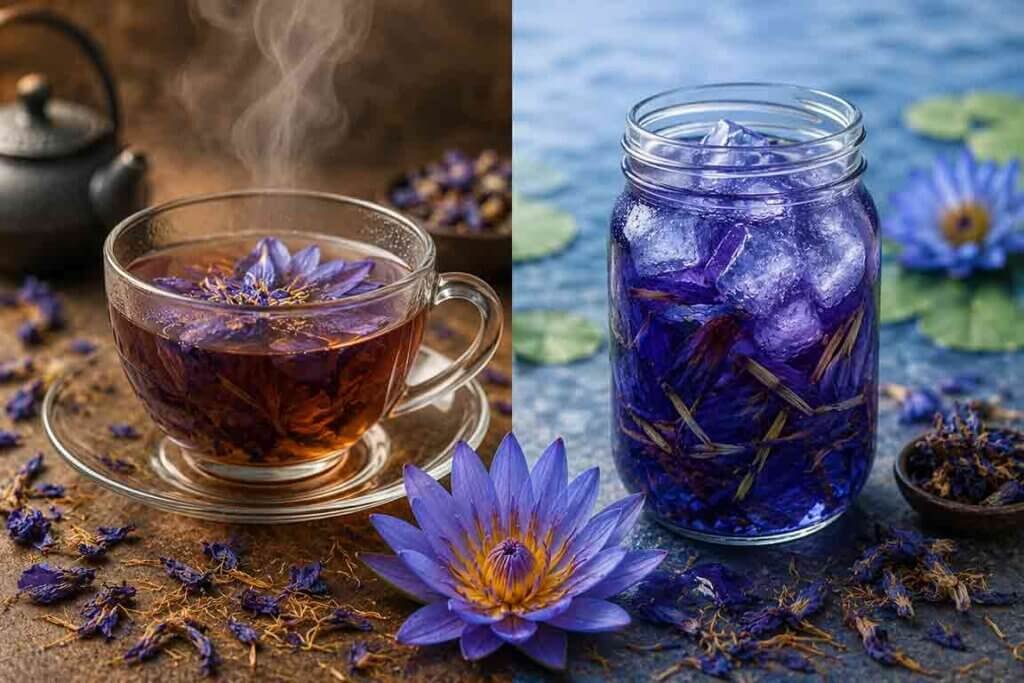
Blue lotus tea has quietly moved from the shelves of niche herbal apothecaries into mainstream wellness culture, and for good reason. The ancient Egyptian flower, scientifically known as Nymphaea caerulea, carries a reputation for promoting relaxation, vivid dreaming, and a mild euphoric calm that feels nothing like the jittery edge of caffeine. But as more people discover this remarkable botanical, a very practical question keeps coming up: should you brew it hot or cold? And more importantly, which method actually pulls more of the flower’s beneficial compounds into your cup?
This is not a simple question with a one-line answer. The brewing method you choose genuinely changes what ends up in your tea, how it tastes, how long the effects last, and how efficiently you’re using your blue lotus petals. Whether you’re new to this flower or you’ve been drinking it for months, understanding the chemistry and experience behind each method will help you get far more out of every gram you brew.
What Is Blue Lotus Tea and Why Does the Brewing Method Matter?
Before diving into the hot versus cold debate, it helps to understand what you’re actually trying to extract when you brew blue lotus. The flower contains several active constituents, but the two most discussed are apomorphine and nuciferine. Apomorphine is a naturally occurring psychoactive alkaloid that interacts with dopamine receptors, contributing to the feelings of mild euphoria and mental calm that blue lotus is known for. Nuciferine, on the other hand, is an antipsychotic-like alkaloid that acts as a serotonin receptor antagonist and contributes to the sedative, dream-enhancing quality of the flower.
Beyond these two primary alkaloids, blue lotus also contains flavonoids, antioxidants, and other bioactive plant compounds that contribute to its overall wellness profile. The reason brewing method matters so much is that these different compounds have different solubility characteristics. Some compounds extract more readily in hot water. Others break down under heat and are actually better preserved in a cold-water environment. This is not just tea preference; it is plant chemistry, and it directly affects what ends up in your body.
How Hot Brewing Works for Blue Lotus Tea
Hot brewing is the traditional method, and it remains the most commonly recommended approach for blue lotus tea. When you steep dried blue lotus petals in hot water, typically between 185°F and 212°F (85°C to 100°C), the heat accelerates the extraction process significantly. Alkaloids like apomorphine and nuciferine are known to be heat-soluble, meaning hot water draws them out of the plant material much more quickly and, in many cases, more completely than cold water does.
A standard hot brew involves steeping two to four grams of dried blue lotus petals in about eight to twelve ounces of hot water for anywhere between five and fifteen minutes. The longer you steep, the stronger and more bitter the flavor becomes. Many experienced users recommend keeping the steep time between seven and ten minutes for a balanced result, enough extraction without turning the tea unpleasantly astringent.
One important thing to note about hot brewing is that the effects tend to come on relatively quickly. Because the alkaloids are already fully dissolved in the water and the warmth of the liquid itself may slightly accelerate absorption in the body, many people report feeling the calming, mood-lifting effects of blue lotus within thirty to forty-five minutes of drinking a hot brew. This makes the hot method particularly useful for intentional rituals, a cup before meditation, before bed, or before a creative session where you want to drop into a relaxed, slightly dreamy mental state.
The flavor profile of hot-brewed blue lotus tea is distinctly floral and slightly earthy, with a mild bitterness that some people love and others find takes getting used to. You can soften that bitterness by adding raw honey or pairing the blue lotus petals with complementary herbs like chamomile, rose, or lavender.
Does Heat Destroy Any of the Active Compounds in Blue Lotus?
This is one of the most important questions when comparing brewing methods, and the answer is nuanced. While heat is generally effective at extracting alkaloids from blue lotus, very high temperatures sustained for long periods can begin to degrade certain delicate compounds, particularly some of the antioxidant flavonoids. Boiling water applied directly and steeped for twenty minutes or more may slightly reduce the concentration of heat-sensitive constituents.
This is why many herbalists recommend letting boiling water sit for a minute or two before pouring it over your petals rather than using a rolling boil directly. You’re still hot-brewing, but you’re protecting the more delicate plant compounds by using water that’s very hot without being maximally aggressive. Think of it the same way you’d approach a high-quality green tea; you want significant heat, but not scorching.
How Cold Brew Works for Blue Lotus Tea
Cold brew blue lotus tea is a significantly slower extraction process, but that slowness is actually part of what makes it interesting. In cold brewing, you submerge your dried blue lotus petals in room-temperature or cold water and allow them to steep for an extended period, usually anywhere from four to twelve hours, with many people preferring an overnight cold brew in the refrigerator for eight to ten hours.
Because cold water extracts plant compounds much more slowly than hot water, the chemical profile of cold-brewed blue lotus tea is genuinely different from its hot-brewed counterpart. Cold water is gentler on heat-sensitive compounds, meaning certain antioxidants, delicate flavonoids, and other secondary plant metabolites that might be partially degraded by heat are preserved more fully in a cold brew. The result is a tea that some users describe as smoother, subtly sweeter, and less bitter than the hot-brewed version.
However, and this is important, the alkaloid extraction rate in cold brew is lower. Apomorphine and nuciferine are more readily dissolved by heat, so a cold brew of the same duration using the same amount of petals will generally yield lower alkaloid concentrations than a hot brew. This doesn’t make cold brew ineffective, but it does mean you may need to use slightly more plant material, extend your steeping time, or accept that the experience will be gentler and more gradual.
Cold Brew Blue Lotus: The Experience and Benefits
Despite the lower alkaloid concentration, cold brew blue lotus tea has a devoted following, and there are real reasons for that. The gentler extraction creates a tea where the subtle, supporting compounds, the flavonoids, the antioxidants, the softer herbal notes, have more presence relative to the alkaloids. Many users report that cold brew blue lotus delivers a more sustained, mellow relaxation rather than the more noticeable onset that hot brew can create.
For people who are sensitive to the effects of blue lotus, cold brew is actually a smarter starting point. The lower alkaloid concentration means you’re less likely to feel any heaviness or sedation, especially if you’re drinking the tea during the day rather than in the evening. It’s a wonderful option for a calm, clear-headed focus without the edge of intensity that a strong hot brew might bring.
Cold brew blue lotus also makes an excellent base for wellness drinks. Because it extracts a cleaner, more delicate flavor, it pairs beautifully with ingredients like coconut water, a slice of lemon, fresh mint, or even a touch of rose water. Served over ice, it becomes an elegant botanical beverage that’s as pleasant to look at as it is to drink.
Which Method Extracts More Alkaloids?
If your primary goal is maximum alkaloid extraction, meaning you want the most apomorphine and nuciferine per gram of blue lotus, then hot brewing wins, and it’s not particularly close. The chemistry is straightforward: alkaloids are more soluble in hot water, they dissolve faster, and they dissolve more completely. A well-executed hot brew of ten minutes at around 190°F will yield a meaningfully higher alkaloid concentration than even a twelve-hour cold brew using the same amount of petals.
For those who use blue lotus specifically for its relaxation, dream enhancement, or mood-supporting properties, the hot brew method is the more efficient choice from a purely pharmacological standpoint. You get more from the same amount of flower.
Which Method Extracts More Overall Plant Compounds?
This is where the answer flips. When you consider the full spectrum of compounds in blue lotus, not just the alkaloids but the antioxidants, flavonoids, tannins, and other bioactive plant molecules, cold brew may actually offer a more complete phytochemical profile. Heat selectively destroys certain compounds while enhancing the extraction of others. Cold brew, being gentler, extracts a broader but lower-concentration mix of constituents.
If you think about blue lotus not just as a vehicle for its alkaloids but as a full medicinal flower with a complex phytochemical makeup, the cold brew method respects and preserves more of that complexity. Some herbalists argue that the whole-plant experience, alkaloids plus flavonoids plus secondary metabolites, creates a more balanced effect than maximizing alkaloid concentration alone.
Hot Brew vs. Cold Brew: The Taste Difference
Let’s talk honestly about flavor, because for many people, this matters just as much as efficacy. Hot-brewed blue lotus tea has a more pronounced, complex flavor. It’s floral and herbaceous, with a distinct earthiness and a noticeable bitterness on the finish that becomes more intense with longer steep times. It tastes like an intentional herbal brew, purposeful, slightly medicinal, and deeply aromatic.
Cold-brewed blue lotus tea is noticeably smoother and softer. The bitterness is minimal, the floral notes are more delicate, and there’s often a subtle sweetness that doesn’t require any added honey or sweetener. For people who struggle with the bitterness of the hot brew, cold brew is frequently a revelation. It makes the experience of drinking blue lotus genuinely pleasurable in a way that the hot version sometimes isn’t for newcomers.
The Role of Steeping Time in Both Methods
Steeping time is one of the most underappreciated variables in blue lotus tea preparation regardless of which method you choose. In hot brewing, the difference between a five-minute and a fifteen-minute steep is dramatic. Five minutes gives you a lighter, more floral cup with mild effects. Fifteen minutes gives you a richer, more bitter cup with noticeably stronger alkaloid presence. Most experienced users land somewhere between seven and ten minutes as their sweet spot.
In cold brewing, the relationship between time and extraction is much more gradual. The difference between a four-hour and an eight-hour cold brew is real but less dramatic than in hot brewing. Going beyond twelve hours in a cold brew doesn’t typically result in a significantly stronger tea. It may actually start to develop an off-flavor from over-extraction of tannins, even in cold water. Eight to ten hours in the refrigerator is the widely agreed-upon optimal window for cold brew blue lotus.
Combining Both Methods: The Hybrid Approach
Here’s something that many experienced blue lotus enthusiasts have discovered: you don’t have to choose. A hybrid brewing method uses a short hot brew to extract the alkaloids efficiently, then chills the resulting tea over ice to rapidly cool it, producing a drink that combines the alkaloid concentration of hot brewing with some of the smoother, more preserved quality of a cold beverage.
You can also do what’s sometimes called a cold bloom followed by a warm finish, starting your petals in cold water for a few hours to gently open the plant material and begin extracting the delicate compounds, then briefly warming the resulting liquid to complete the alkaloid extraction without a long high-heat exposure. This approach is more labor-intensive but is favored by tea enthusiasts who are genuinely trying to get everything the flower has to offer.
Practical Tips for Getting the Most Out of Blue Lotus Tea
Water quality matters more than most people realize. Filtered or spring water will always produce a better-tasting and potentially more effective cup than tap water, which can contain chlorine and other chemicals that interfere with the delicate flavors and bioavailability of plant compounds.
The quality of your petals is the most important factor of all. Neither hot nor cold brewing can compensate for low-quality, old, or improperly stored blue lotus. Look for petals that are vibrant in color, aromatic when you open the bag, and sourced from a reputable supplier who can speak to how the flowers were harvested and dried.
Start with a lower dose if you’re new. Whether you hot-brew or cold-brew, beginning with two grams and working your way up to four or five grams over time is a sensible approach. Blue lotus affects people differently, and finding your personal optimal amount through gradual experimentation is far more useful than starting strong and having an uncomfortable experience.
Conclusion: Which Method Should You Choose?
The honest answer is that the best brewing method for blue lotus tea depends entirely on what you’re looking for. If you want maximum alkaloid extraction, faster onset, and a stronger traditional herbal experience, hot brewing is your method. It is more efficient, better studied in traditional use, and produces a noticeably more potent cup when done correctly.
If you want a smoother, more gentle experience, better flavor, preserved antioxidants, and a more gradual effect, cold brew is a genuinely excellent alternative that deserves far more attention than it typically gets. It’s also more forgiving for beginners and more versatile as a base for creative wellness drinks.
The most sophisticated approach, used by those who have truly fallen in love with this ancient flower, is to understand both methods deeply and choose between them based on your intention for each session. Hot brew for evening rituals, intentional relaxation, and dream work. Cold brew for daytime calm, creative focus, and purely pleasurable sipping. Both methods get something meaningful out of the flower; they just get different things, and that difference is worth understanding and celebrating.
Frequently Asked Questions
Q1: Is hot or cold brew blue lotus tea stronger?
Hot brew is generally stronger because heat extracts alkaloids like apomorphine and nuciferine more efficiently. Cold brew produces a milder, gentler effect due to lower alkaloid concentration.
Q2: How long should I steep blue lotus tea?
For hot brew, seven to ten minutes is the ideal range. For cold brew, steep eight to ten hours in the refrigerator overnight for the best balance of flavor and potency.
Q3: Can I drink blue lotus tea every day?
Occasional use is considered safe for most healthy adults, but daily consumption is not well-studied. Most herbal wellness practitioners recommend enjoying it a few times per week rather than making it a daily habit.
Q4: Does cold brew blue lotus tea still have health benefits?
Yes. Cold brew preserves more heat-sensitive antioxidants and flavonoids that hot water can partially degrade, making it a beneficial option even though its alkaloid content is lower than a hot brew.
Q5: What does blue lotus tea taste like?
Hot brew tastes floral and earthy with a noticeable bitter finish. Cold brew is noticeably smoother, softer, and slightly sweeter, making it more approachable for those new to the flower.