If you have spent any time exploring natural remedies for anxiety, you have probably come across blue lotus at some point. It has been showing up everywhere lately, from herbal tea blends to tinctures, vapes, and even infused wines. The ancient Egyptians were obsessed with it, and now it seems like modern wellness culture is catching up. But here is the real question everyone is asking: does blue lotus genuinely reduce anxiety at a neurological level, or does it simply make you feel so calm and floaty that you momentarily forget your worries exist?
That is actually a more nuanced question than it sounds, and the answer might surprise you.
What Is Blue Lotus and Why Is Everyone Talking About It?
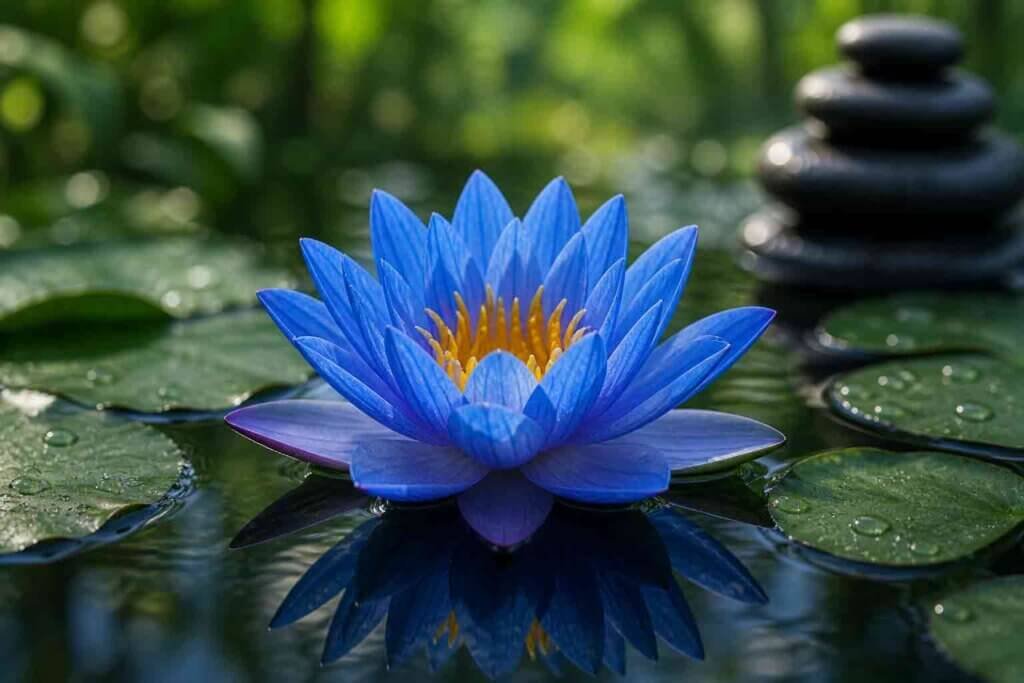
Blue lotus, scientifically known as Nymphaea caerulea, is an aquatic plant native to Egypt and parts of East Africa and Asia. It has a rich ceremonial history stretching back over 3,000 years. Ancient Egyptians used it in religious rituals, depicted it in tomb paintings, and even soaked it in wine to enhance its effects. It was considered a sacred plant linked to the sun god Ra and was associated with spiritual awakening, euphoria, and relaxation.
Fast forward to today, and blue lotus has found a second life in the modern wellness and herbal supplement market. People are drinking it as a tea, smoking the dried petals, taking it as a liquid extract, and even vaping it. The growing interest in plant-based alternatives to pharmaceutical anxiety treatments has pushed blue lotus into the spotlight, especially as more people look for gentler, non-addictive options.
But what makes blue lotus actually work? That comes down to two primary compounds: nuciferine and aporphine.
The Active Compounds Behind Blue Lotus Effects
Nuciferine: The Dopamine Regulator
Nuciferine is an alkaloid found in blue lotus that has drawn significant scientific curiosity. Research suggests that nuciferine acts as an atypical antipsychotic-like compound, meaning it interacts with dopamine receptors in the brain. Specifically, it appears to act as an antagonist at certain dopamine receptors, which can have a calming and mood-stabilizing effect.
This is particularly interesting because dopamine dysregulation is often associated with anxiety, especially social anxiety and anxiety linked to rumination or overthinking. By modulating dopamine activity rather than flooding the brain with it, nuciferine may help bring a sense of grounded calm without the sharp edge of stimulant-like dopamine spikes.
Aporphine: The Mild Euphoria Molecule
The second major compound, aporphine, is structurally related to apomorphine, a compound used medically to treat Parkinson’s disease. Aporphine acts on dopamine receptors as well, but in a way that tends to produce mild euphoric and sedative sensations. It is what gives blue lotus that dreamy, hazy quality that users often describe.
Together, nuciferine and aporphine create a dual effect: a gentle mood lift paired with physical and mental relaxation. This combination is likely why blue lotus has been used ceremonially for millennia and why it is gaining traction as a natural anxiety support tool today.
Does Blue Lotus Actually Reduce Anxiety?
Here is where things get genuinely interesting. The honest answer is: it appears to do both. Blue lotus seems to work through real neurochemical pathways that influence anxiety, and it also produces a state of relaxation that can make anxiety feel temporarily irrelevant. These are not mutually exclusive, and understanding that distinction can actually help you decide whether blue lotus is worth trying.
The Neurochemical Argument for Genuine Anxiety Reduction
For blue lotus to “genuinely” reduce anxiety, it would need to act on the brain systems actually responsible for anxiety. And there is growing evidence that it does. Nuciferine’s interaction with dopamine receptors is relevant because dopamine plays a complex role in anxiety. While serotonin gets most of the attention in anxiety conversations, dopamine is deeply involved in anticipatory anxiety, fear responses, and the motivation to avoid perceived threats.
Additionally, some research points to blue lotus having mild activity at serotonin receptors, particularly 5-HT2A receptors. This is the same receptor target that many psychedelic compounds work on, though blue lotus does so at a much milder and non-hallucinogenic level. Gentle agonism at these receptors has been associated with reduced anxiety and improved emotional processing in studies involving other plant compounds.
There is also emerging interest in blue lotus’s potential GABAergic activity. GABA is the brain’s primary inhibitory neurotransmitter, and it is the system that pharmaceutical benzodiazepines target. While blue lotus is not nearly as potent as a benzo, some preliminary observations suggest it may have mild GABA-modulating properties, which would explain the pronounced physical relaxation users experience.
The “Too Relaxed to Care” Argument
Now, let us be fair about the other side of the coin. A significant part of blue lotus’s anti-anxiety effect is likely just its sedative quality. When your muscles are relaxed, your breathing has slowed, and you feel pleasantly dreamy, anxiety has a much harder time gaining traction. The physical symptoms of anxiety, things like muscle tension, rapid heartbeat, and shallow breathing, are essentially counteracted by the body’s relaxed state.
This is not a bad thing. In fact, it is actually one of the things that makes blue lotus appealing over something like caffeine-containing adaptogenic herbs. The relaxation response itself is genuinely therapeutic. Practices like progressive muscle relaxation, yoga nidra, and breathwork work on the same principle: get the body calm enough, and the mind often follows.
So even if part of blue lotus’s anti-anxiety mechanism is simply making you physically relaxed, that is still a legitimate physiological pathway to reduced anxiety. You are not just ignoring your problems. You are interrupting the physical feedback loop that keeps anxiety spinning.
How Blue Lotus Compares to Other Natural Anxiety Remedies
Blue Lotus vs. Ashwagandha
Ashwagandha is probably the most well-researched natural anxiety remedy on the market right now. It works primarily by reducing cortisol levels and supporting the hypothalamic-pituitary-adrenal (HPA) axis, which governs the stress response. It is an adaptogen, meaning it helps the body adapt to stress over time with consistent use.
Blue lotus, by contrast, works more acutely. You feel its effects relatively quickly, within 20 to 60 minutes depending on how you consume it, and those effects wear off within a few hours. It is less about retraining your stress system and more about offering immediate relief. The two could theoretically be complementary rather than competitive.
Blue Lotus vs. Kava
Kava is another well-known plant used for anxiety that has stronger and more established research behind it. Kava’s active compounds, called kavalactones, have been shown in clinical studies to significantly reduce anxiety, and some reviews have found it comparable to certain pharmaceutical anxiolytics.
Blue lotus is gentler than kava and does not carry the same concerns about heavy or frequent use affecting liver health that have been raised in some kava conversations. For people who find kava too strong, or who experience digestive discomfort with it, blue lotus offers a milder alternative, though with a correspondingly milder effect.
Blue Lotus vs. CBD
CBD has dominated the natural anxiety conversation for years. It works primarily through the endocannabinoid system and has a reasonable body of evidence supporting its use for anxiety. Blue lotus works through entirely different pathways, which means the two are not really in competition. Some people even combine them, though anyone doing so should approach with caution and ideally with guidance from a knowledgeable healthcare provider.
What Does the Research Actually Say?
This is the part where complete honesty is necessary. The direct human clinical research on blue lotus and anxiety is limited. Most of what we know comes from historical use, animal studies, and research on the isolated compounds like nuciferine and aporphine rather than on the whole plant extract itself.
What we do have suggests promising mechanisms. Studies on nuciferine have confirmed its dopamine receptor activity. Research on plants with similar alkaloid profiles has shown anxiolytic effects in animal models. And centuries of traditional use across multiple cultures offer a kind of empirical track record that, while not the same as a randomized controlled trial, is not meaningless either.
The absence of robust clinical studies does not mean blue lotus does not work. It means it has not been studied adequately yet, which is true of many traditional medicinal plants that predate modern pharmaceutical research methods. As interest in botanical medicine grows, more rigorous research is likely to follow.
How to Use Blue Lotus for Anxiety
Tea Infusion
The most traditional and arguably safest way to consume blue lotus is as a tea. Dried petals are steeped in hot water for about 10 to 15 minutes. The taste is earthy and subtly floral. Effects are typically mild, making this a good starting point for those new to the plant.
Tinctures and Extracts
Liquid tinctures allow for more precise dosing and tend to have a slightly faster onset than tea. They are also more convenient for people who want to add blue lotus to their daily routine without brewing a cup each time.
Smoking or Vaping
Some people smoke or vape dried blue lotus petals. This delivers a faster onset but comes with all the standard concerns about inhaling plant material. It is generally not considered the healthiest delivery method, though many users prefer it for the quicker effects.
Who Should and Should Not Try Blue Lotus
Blue lotus may be worth exploring if you experience mild to moderate anxiety, have not found satisfying results with other herbal options, are sensitive to stimulants, or are looking for an occasional calming support rather than a daily pharmaceutical solution.
You should avoid or approach with significant caution if you are pregnant or breastfeeding, currently taking prescription medications (especially psychiatric medications, blood thinners, or sedatives), have a history of substance dependence, or are dealing with severe anxiety disorders that require clinical care.
It is also worth noting that while blue lotus is legal in most countries, it occupies a gray area in a few places, and regulations can vary. Always check the legal status in your specific location before purchasing or consuming it.
The Spiritual and Psychological Dimension
One thing that often gets overlooked in herb-and-anxiety conversations is the role of mindset and ritual. The act of intentionally preparing a calming tea, sitting quietly, and giving yourself permission to unwind is itself therapeutic. Blue lotus has centuries of ceremonial use behind it, and there is something psychologically meaningful about connecting with that tradition, even loosely.
Many users report that blue lotus seems to create a state that is particularly conducive to meditation, creative thinking, and emotional reflection. If anxiety for you is largely driven by mental noise and racing thoughts, the gentle mental quietude that blue lotus promotes might offer a window for processing and self-inquiry that is harder to access in a more activated state.
Is It Habit-Forming?
One of the more reassuring things about blue lotus is that it does not appear to be significantly habit-forming. Unlike benzodiazepines, which can create physical dependence fairly quickly, or even kratom, which carries real addiction potential, blue lotus does not seem to hook the brain’s reward system in the same aggressive way.
That said, psychological reliance on any substance for anxiety management is worth watching. If you find yourself unable to manage social situations or calm down without reaching for blue lotus every time, that is a pattern worth reflecting on regardless of the substance’s pharmacological addictive potential.
Conclusion
So, does blue lotus genuinely reduce anxiety or does it just make you too relaxed to care? The honest answer is that it probably does both, and that is not the limitation it might initially sound like. The neurochemical activity of its primary compounds, particularly nuciferine’s dopamine receptor modulation and possible serotonergic and GABAergic effects, suggests real biological mechanisms for anxiety relief. At the same time, its sedative and muscle-relaxing qualities create a physical environment where anxiety simply has less room to breathe.
What blue lotus is not is a miracle cure or a replacement for therapy, lifestyle changes, or medical care when those are needed. What it might be is a genuinely useful, historically grounded, and reasonably safe botanical tool for moments when your nervous system needs a gentle hand on the shoulder rather than a prescription intervention.
If you approach it with realistic expectations, appropriate caution, and a willingness to pay attention to how your own body responds, blue lotus might just earn a thoughtful place in your personal wellness toolkit.
Frequently Asked Questions
Q1: How long does it take for blue lotus to reduce anxiety?
When consumed as a tea, effects typically begin within 20 to 60 minutes. Tinctures and vaporized forms work faster, usually within 10 to 20 minutes. Effects generally last between 2 to 4 hours depending on your sensitivity and the amount used.
Q2: Can you take blue lotus every day for anxiety?
Occasional use is generally considered safer than daily consumption. There is limited long-term research on daily use, so most herbal practitioners recommend using it as needed rather than as a fixed daily supplement, at least until more research becomes available.
Q3: Does blue lotus make you feel high?
Not in a dramatic way. Most users describe a mild sense of euphoria, mental calm, and physical relaxation rather than an intense altered state. It is subtle enough that many people compare it to the feeling after a good meditation session rather than any kind of psychoactive experience.
Q4: Is blue lotus safe to mix with other anxiety medications?
No, you should not mix blue lotus with prescription medications, especially sedatives, antidepressants, or blood thinners, without first consulting your doctor. Its dopaminergic and possible GABAergic activity could interact with certain psychiatric drugs in unpredictable ways.
Q5: Is blue lotus legal to buy and use?
Blue lotus is legal in most countries including the United States and the United Kingdom. However, it is banned or restricted in a small number of countries, so checking the specific regulations in your location before purchasing is always a smart step.