
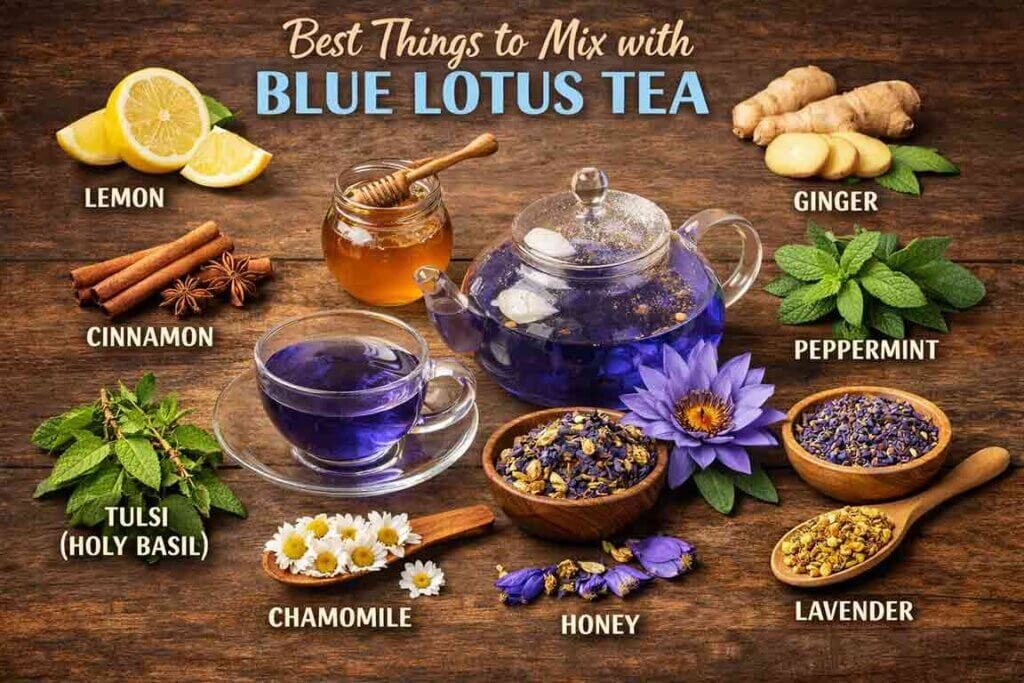
Blue lotus tea has been quietly making its way into wellness circles, herbal apothecaries, and late-night relaxation routines around the world. Brewed from the dried petals and stamens of Nymphaea caerulea, this ancient flower has roots in Egyptian, Hindu, and Mayan cultures, where it was revered for its calming, mildly euphoric, and dream-enhancing properties. Today, more and more people are discovering this floral brew and wondering the same thing: what can you mix with blue lotus tea to make it taste better, feel stronger, or offer more health benefits?
That is exactly what this guide covers. Whether you are a first-time sipper or a seasoned herbal tea enthusiast, knowing the right combinations and the wrong ones can make all the difference between a pleasant ritual and an uncomfortable experience.
What Does Blue Lotus Tea Taste Like?
Before getting into what to mix it with, it helps to understand the base flavor. Blue lotus tea on its own has a lightly floral, slightly earthy, and subtly sweet taste. It is not overwhelmingly strong, but it can have a faintly bitter or grassy undertone depending on how long you steep it. Many people enjoy it as-is, but others find that blending it with complementary herbs or natural flavors elevates the entire experience.
The mild taste profile of blue lotus actually makes it a fantastic candidate for blending. It does not overpower other flavors, and it plays well with both sweet and herbal notes.
The Best Things to Mix With Blue Lotus Tea
Honey and Natural Sweeteners
One of the simplest and most effective additions to blue lotus tea is raw honey. The floral sweetness of honey naturally complements the delicate petals and smooths out any bitter edges left behind from steeping. Raw honey also brings its own set of benefits including antioxidants and antimicrobial properties, making it a functionally smart pairing.
If you prefer to avoid honey, maple syrup or agave nectar work beautifully as well. These natural sweeteners enhance the floral note without masking the subtle effects of the blue lotus. Avoid refined white sugar if possible, as it can sometimes create an overly sharp sweetness that clashes with the earthy undertones of the brew.
Chamomile
Chamomile and blue lotus are practically made for each other. Both are known for their calming, sleep-supporting properties, and when brewed together, they create a deeply relaxing cup that is ideal for winding down before bed. The apple-like sweetness of chamomile softens the earthiness of blue lotus and produces a tea that tastes almost like a floral dessert.
This combination is especially popular among people who use blue lotus tea for its dream-enhancing effects, as chamomile supports restful sleep while blue lotus is said to encourage vivid and lucid dreaming. Steep them together for about five to seven minutes and add a drizzle of honey for a sleep ritual that genuinely works.
Lavender
Lavender is another powerhouse pairing. The aromatic, slightly woody sweetness of lavender buds brings a spa-like quality to the cup and amplifies the stress-relieving properties that blue lotus is known for. Together, these two herbs create a blend that feels luxurious and therapeutic at the same time.
The key with lavender is to use it sparingly. A small pinch of dried lavender buds goes a long way, and too much can make your tea taste like soap. A ratio of roughly one part lavender to three parts blue lotus works well for most people.
Lemon and Citrus
Adding a squeeze of fresh lemon juice or a few slices of orange to blue lotus tea brightens the flavor considerably. The acidity cuts through any lingering bitterness and adds a refreshing citrus top note that makes the tea feel lighter and more vibrant. This is particularly nice if you are drinking blue lotus tea in the afternoon rather than before bed.
Vitamin C from citrus also supports the body’s ability to absorb certain plant compounds, which could potentially enhance the overall experience. Citrus zest grated directly into the cup adds an even more aromatic dimension.
Rose Petals
Dried rose petals are a gorgeous addition both visually and aromatically. They blend seamlessly with blue lotus because both are floral by nature, and the mild sweetness of rose rounds out the cup beautifully. Rose is also traditionally associated with heart-opening, mood-lifting properties in herbal medicine, making it a thoughtful companion for a mindful tea ritual.
You can buy dried rose petals specifically for culinary or tea use, which ensures they are free from pesticides and fragrance additives. Steep them together with your blue lotus for a tea that looks and tastes almost poetic.
Passionflower
For those who use blue lotus tea specifically for anxiety relief or sleep support, passionflower is an excellent herbal addition. Passionflower is one of the most well-studied calming herbs available, with research suggesting it may support GABA activity in the brain, helping the nervous system ease down into a state of calm.
When blended with blue lotus, the two herbs create a synergistic effect that many users describe as deeply peaceful. This is not a combination for daytime use, as it can be genuinely sedating. Save it for evenings when you have no obligations and simply want to rest.
Ginger
If you want to add a warming kick to your blue lotus tea, fresh ginger is the answer. Ginger adds a spicy, invigorating heat that contrasts beautifully with the cool floral nature of blue lotus. It also supports digestion, making this combination great for an after-dinner tea ritual.
Slice a few thin coins of fresh ginger and add them to your tea while it steeps, or muddle them slightly for a more intense flavor. A little lemon alongside the ginger makes this even more refreshing and balances the spice.
Milk and Plant-Based Milks
Blue lotus tea can be transformed into something truly indulgent by adding oat milk, coconut milk, or almond milk. This creates a creamy, floral latte that sits beautifully in a mug and tastes like something from a specialty café. Warm the milk separately and froth it before pouring it over a concentrated blue lotus brew for the full latte effect.
Coconut milk in particular pairs wonderfully because its mild sweetness and richness complement the floral delicacy of the petals. Add a touch of vanilla extract and honey, and you have a drink that feels like pure self-care.
Mugwort
Mugwort is perhaps the most specialized pairing on this list. It is an herb with a long history of use in dream work and lucid dreaming practices, and when combined with blue lotus, the two together are considered by many herbalists to be a potent dream-enhancement blend. Both herbs have been used historically as oneirogenic plants, meaning they are believed to influence the quality and vividness of dreams.
This is a combination best reserved for experienced herbal tea drinkers. Mugwort has a strong, slightly bitter flavor that is not for everyone, and it should be avoided during pregnancy. Use it in small amounts alongside your blue lotus before bed and keep a dream journal nearby.
What to Absolutely Avoid Mixing With Blue Lotus Tea
Alcohol
This is perhaps the most important warning. Blue lotus has mild psychoactive properties due to compounds like nuciferine and aporphine, which act on dopamine and serotonin receptors. Mixing it with alcohol can intensify both the sedative effects of alcohol and the euphoric effects of blue lotus in unpredictable ways. The combination can lead to dizziness, nausea, impaired judgment, and excessive sedation. It is simply not worth the risk, and the two should be kept completely separate.
Prescription Sedatives and Benzodiazepines
If you are taking any prescription medications that affect the central nervous system, including benzodiazepines, sleep aids, or anti-anxiety medications, you should consult your doctor before drinking blue lotus tea. The calming properties of blue lotus may compound the effects of these medications, leading to excessive sedation or other adverse reactions. Always prioritize safety when combining any herbal remedy with prescription drugs.
Stimulants and Caffeine in Large Amounts
While a small amount of green tea alongside blue lotus is generally fine, combining large doses of caffeine or other stimulants with blue lotus can create an unpleasant tension in the body. The calming effects of blue lotus and the stimulating effects of caffeine work against each other, which can sometimes result in jitteriness, headaches, or an overall anxious and unsettled feeling.
Synthetic Flavoring Agents
On a purely culinary note, avoid mixing blue lotus with artificial flavor syrups or highly processed sweeteners like aspartame or sucralose. These synthetic additives can mask the delicate natural flavor of blue lotus entirely and may introduce an unpleasant chemical aftertaste. They also offer no complementary health benefits. Stick to natural sweeteners and whole-food flavor additions for the best result.
Other Psychoactive Herbs in High Doses
Blue lotus is mild on its own, but stacking it with multiple other psychoactive or strongly sedating herbs in high doses is not recommended without expert guidance. Combining herbs like kava, valerian, California poppy, or skullcap all together with blue lotus creates an unpredictable mix that can result in heavy sedation, grogginess the next morning, or in rare cases, nausea.
How to Brew Blue Lotus Tea for the Best Results
To get the most out of any of the combinations above, it helps to brew your blue lotus correctly. Use water that has been heated to around 85 to 90 degrees Celsius, not a full rolling boil, as excessive heat can degrade some of the more delicate aromatic compounds in the petals. Steep for five to ten minutes depending on your preferred strength.
Using Blue Lotus as a Tea Base
If you want to use blue lotus as the foundation of a more complex herbal blend, brew a strong concentrate of blue lotus first using about two to three grams of dried petals in just a small amount of hot water. Then dilute this concentrate with your chosen additions, whether that is warm oat milk, a chamomile infusion, or a ginger lemon blend. This method gives you more control over the final flavor profile.
Cold Brew Blue Lotus Tea
Cold brewing is another option worth exploring. Combine your blue lotus petals with cold or room temperature water and let them steep in the refrigerator for six to eight hours. Cold brewing produces a smoother, less bitter infusion that pairs particularly well with citrus, rose, or a splash of coconut water for a refreshing summer drink.
How Often Should You Drink Blue Lotus Tea?
Blue lotus tea is best enjoyed in moderation. Most herbalists recommend drinking it two to three times per week at most, particularly if you are using it for its calming or dream-enhancing effects. Daily use over a prolonged period is not well studied, and like any herbal supplement, it is wise to take occasional breaks to allow your body to reset.
Final Thoughts on Finding Your Perfect Blue Lotus Blend
Blue lotus tea is one of those rare herbs that is both gentle and genuinely interesting to work with. It sits at the intersection of flavor, history, and wellness, and it responds beautifully to thoughtful pairings. Whether you blend it with lavender and honey for a bedtime ritual, with ginger and lemon for a warming afternoon cup, or with chamomile and passionflower for deeper sleep support, the possibilities are rich and rewarding.
The key is to start simple, respect the herb, and avoid the combinations that can undermine both your safety and your experience. Know what you are mixing and why, and you will find that blue lotus tea becomes one of the most enjoyable and versatile additions to your herbal tea collection.
Conclusion
Mixing blue lotus tea with the right companions, such as honey, chamomile, rose petals, lavender, or ginger, can transform a simple herbal brew into a genuinely extraordinary ritual. Each pairing brings something unique to the cup, whether that is enhanced flavor, deeper relaxation, better sleep, or a more vivid dream experience. On the other hand, avoiding alcohol, prescription sedatives, and large doses of other psychoactive herbs is essential for a safe and pleasant experience. Blue lotus is a gift from the ancient world, and treating it with care, curiosity, and the right blending partners will reward you every single time you brew a cup.
Frequently Asked Questions About Blue Lotus Tea
Q1: Can I mix blue lotus tea with regular green or black tea?
Yes, you can combine blue lotus with green tea in moderate amounts. However, avoid pairing it with large quantities of black tea, as the higher caffeine content can clash with blue lotus’s calming effects and leave you feeling restless or unsettled.
Q2: Is it safe to drink blue lotus tea every day?
Daily consumption is not widely recommended. Most herbalists suggest limiting blue lotus tea to two or three times per week and taking occasional breaks to prevent your body from building a tolerance and to allow for proper rest between uses.
Q3: Can I add blue lotus tea to a smoothie instead of drinking it hot?
Absolutely. Brewing a cold concentrate and adding it to a smoothie with banana, coconut milk, and honey is a popular option. Just make sure the tea is fully cooled before blending it to preserve both the flavor and the beneficial plant compounds.
Q4: How long does it take to feel the effects of blue lotus tea?
Most people begin to notice the calming or mildly euphoric effects within 20 to 40 minutes of drinking the tea. The intensity depends on the strength of your brew, your body weight, and your individual sensitivity to the herb.
Q5: Can pregnant or breastfeeding women drink blue lotus tea?
No. Blue lotus tea is not considered safe during pregnancy or breastfeeding due to its mild psychoactive compounds and its historical use as a uterine stimulant. Always consult a healthcare provider before consuming any herbal tea during pregnancy.