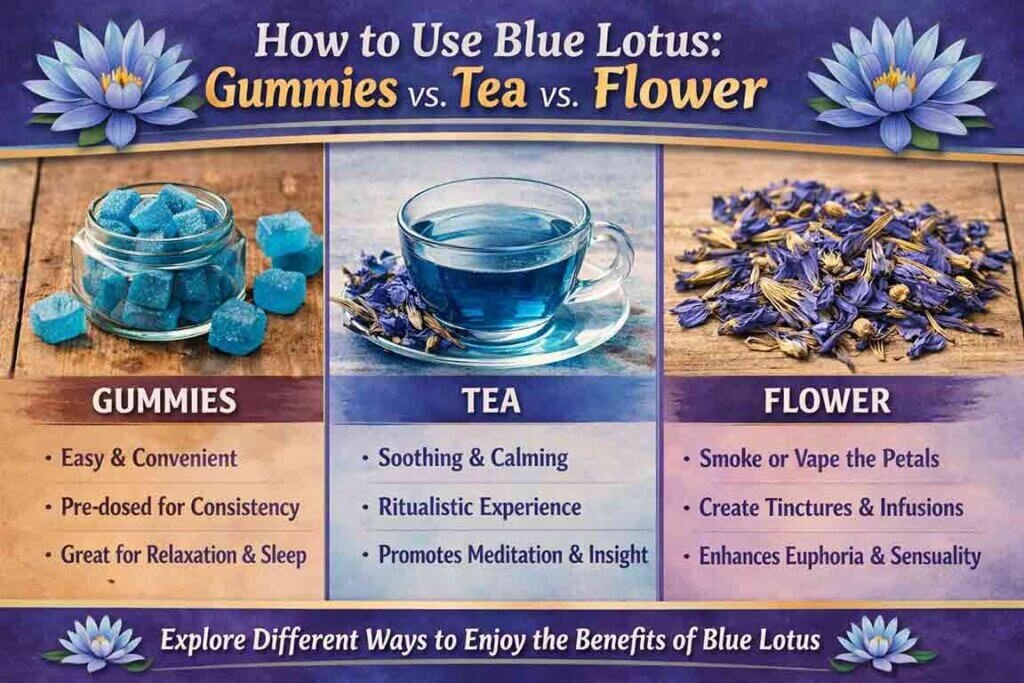
If you’ve been hearing more about blue lotus lately, you’re not alone. This ancient botanical has been making a serious comeback in the wellness world, and for good reason. Whether you’re curious about its calming effects, its dreamy qualities, or simply want a natural way to unwind, blue lotus offers a fascinating entry point into herbal wellness. But here’s the thing — how you use it matters a lot. Gummies, tea, and raw flower each deliver a different kind of experience, and if you’re just starting out, knowing the difference can make or break your first impression of this remarkable plant.
Let’s walk through everything you need to know.
What Is Blue Lotus and Why Is It So Popular Right Now?
Blue lotus (Nymphaea caerulea) is a water lily that has roots stretching back thousands of years to ancient Egypt, where it was used in spiritual ceremonies, relaxation rituals, and even as an aphrodisiac. The plant contains two primary active compounds — nuciferine and aporphine — both of which interact with dopamine receptors in the brain to produce mild sedative, euphoric, and mood-lifting effects.
Today, blue lotus is enjoying a renaissance because people are actively searching for natural alternatives to alcohol, sleep aids, and anxiety medications. It’s not psychedelic in the traditional sense, but it does create a gentle, dream-like state of calm that many users describe as deeply relaxing without being overwhelming. That’s a sweet spot that’s hard to find in the wellness world, and it’s exactly why more people are reaching for blue lotus in one form or another.
The Three Main Ways to Use Blue Lotus
When you start exploring blue lotus, you’ll quickly realize there are several ways to consume it. The three most popular formats are gummies, tea, and raw flower. Each one has its own distinct vibe, onset time, potency level, and use case. Understanding these differences is the first step to having a great experience.
How to Use Blue Lotus Tea (The Traditional Method)
What Is Blue Lotus Tea?
Blue lotus tea is made by steeping dried blue lotus flowers or petals in hot water, much like you would with chamomile or hibiscus. This is the most traditional way to consume the plant and the method that has been used for centuries across ancient cultures. It’s also one of the gentlest ways to start, which makes it ideal for absolute beginners.
How to Make Blue Lotus Tea at Home
Making blue lotus tea is refreshingly simple. You’ll want to use about 3 to 5 grams of dried blue lotus flower per cup of water. Heat your water to around 90°C (not a full boil, as excessive heat can degrade some of the active compounds). Let the flowers steep for 10 to 15 minutes, then strain and sip slowly.
Many people like to add honey, lemon, or another herbal tea like chamomile to complement the slightly earthy, floral flavor. The taste on its own is subtle but pleasant — not harsh at all. If you want a stronger effect, you can increase the steeping time or add a few extra grams of dried flower.
What Does Blue Lotus Tea Feel Like?
Most users describe the effect of blue lotus tea as gentle relaxation with a mild mood lift. You might notice a light sense of warmth spreading through your body, followed by a calm mental state that makes it easier to unwind in the evening. Some people also report more vivid dreams when they drink blue lotus tea before bed, which is one of the plant’s most talked-about qualities.
Onset is typically 30 to 60 minutes, and effects can last anywhere from 2 to 4 hours depending on your individual body chemistry and how much you’ve consumed.
How to Use Blue Lotus Gummies (The Modern Approach)
What Are Blue Lotus Gummies?
Blue lotus gummies are a newer, more modern format that extracts the active compounds from the flower and infuses them into a chewable gummy. These are pre-dosed, convenient, and beginner-friendly in a way that raw flower simply isn’t. You don’t need to measure anything, brew anything, or worry about potency variability.
How Many Blue Lotus Gummies Should a Beginner Take?
This is one of the most common questions, and the answer depends on the brand and concentration. Most blue lotus gummies for beginners contain somewhere between 10mg and 50mg of extract per gummy. A good starting point is always one gummy, especially if you’ve never tried blue lotus before. Wait at least 60 to 90 minutes before considering taking more, since edibles of any kind can take longer to hit than you might expect.
Start low, go slow — this is the golden rule of blue lotus gummy use, and it applies regardless of your experience with other herbal products.
What Do Blue Lotus Gummies Feel Like?
Gummies tend to deliver a more consistent and predictable experience than tea or raw flower because the dosage is standardized. Users commonly report feelings of relaxation, mild euphoria, and a pleasant dreaminess. Some people use them specifically for stress relief in the evening, while others incorporate them into creative or meditative practices.
The onset for gummies is a bit slower than tea — typically 45 minutes to 90 minutes — because the extract needs to be metabolized through the digestive system. The effects also tend to last slightly longer, often in the 3 to 5 hour range.
Are Blue Lotus Gummies Safe?
When sourced from a reputable brand, blue lotus gummies are generally considered safe for healthy adults. However, it’s important to purchase from companies that provide third-party lab testing results. This ensures what you’re consuming is accurately labeled and free from contaminants. Avoid blue lotus gummies that make extravagant health claims or come without any ingredient transparency.
How to Use Blue Lotus Flower (Raw and Smoke-Free Options)
What Are Your Options With Raw Blue Lotus Flower?
Raw or dried blue lotus flower gives you the most versatility of all three formats. You can brew it as tea (as covered above), but you can also use it in other ways. Some people add the dried petals to bathwater for a calming soak. Others use it in aromatherapy by placing dried flowers around their living space. A smaller segment of users smoke or vaporize blue lotus flower, though this is a more controversial method that’s worth discussing separately.
Can You Smoke Blue Lotus Flower?
Yes, some people do smoke dried blue lotus flower, either on its own or blended with other herbs. Smoking delivers the fastest onset of any consumption method — usually within minutes — and the effects tend to be milder and shorter-lived than tea or gummies. However, smoking anything carries inherent respiratory risks, so this isn’t the most recommended method, especially for beginners.
Vaporizing is a somewhat healthier alternative to smoking if you want fast-acting effects without brewing a cup of tea. A dry herb vaporizer set to a medium temperature can activate the active compounds without the combustion associated with smoking.
How to Use Blue Lotus Flower in a Bath or Ritual
One of the most underrated ways to use blue lotus flower is simply by enjoying it as an aromatic ritual. Place a handful of dried flowers in a muslin bag and drop it into a warm bath. The gentle fragrance is calming, and there’s some evidence that topical absorption through the skin can contribute to the relaxing experience, though this isn’t as well-studied as oral consumption.
This is a wonderful option for people who want to explore blue lotus without ingesting it at all.
Gummies vs. Tea vs. Flower: Which Is Best for Beginners?
A Direct Comparison for New Users
If you’re brand new to blue lotus and trying to decide where to start, here’s the honest truth: tea is the most traditional and gentle starting point, gummies are the most convenient and dose-controlled, and raw flower gives you the most flexibility at the cost of requiring more preparation knowledge.
For someone who wants the simplest possible introduction, blue lotus gummies are arguably the best starting point because you always know exactly how much you’re taking. For someone who loves a ritual and wants to connect with the plant’s history, blue lotus tea is deeply satisfying and very forgiving in terms of potency. For someone who wants to experiment and customize, raw flower gives you the most options.
There’s no wrong answer — it really comes down to your personal preferences and lifestyle.
When Is the Best Time to Use Blue Lotus?
Morning, Afternoon, or Evening?
Most people find that blue lotus works best in the late afternoon or evening, particularly when you want to wind down after a long day. It’s not a stimulant, so using it in the morning or before any activity that requires sharp focus isn’t ideal.
Evening use is especially popular because of blue lotus’s well-documented ability to promote vivid, lucid dreaming. Drinking a cup of blue lotus tea about an hour before bed or taking a gummy in the early evening allows the effects to settle in beautifully right around bedtime. Many users report waking up feeling genuinely refreshed and recalling dreams with unusual clarity.
How Much Blue Lotus Should a Beginner Use?
Dosage Guidelines by Format
Getting the dose right is crucial, especially for first-time users. Here’s a general framework to work from:
For blue lotus tea, start with 3 to 5 grams of dried flower per cup. This is a mild, introductory dose. You can work up to 7 to 10 grams over time if you feel you need stronger effects.
For blue lotus gummies, start with a single gummy regardless of the milligram content listed on the package. Give it at least 90 minutes before reassessing.
For raw flower used in other ways (baths, aromatherapy), there’s no strict dosage concern, since these methods are non-ingested and the effects are subtle.
Always listen to your body. Blue lotus affects everyone a little differently, and personal factors like body weight, metabolism, and sensitivity to botanicals all play a role.
What to Avoid When Using Blue Lotus
Common Beginner Mistakes
The most common mistake beginners make is re-dosing too soon. Whether you’re using gummies, tea, or flower, the onset can be deceptively slow. Many new users assume nothing is happening and take more, only to find themselves feeling unexpectedly strong effects later. Patience is everything with blue lotus.
You should also avoid combining blue lotus with alcohol or sedative medications, as the calming effects can become too intense and potentially uncomfortable. If you’re on any prescription medications, particularly those affecting the central nervous system, it’s worth consulting a healthcare provider before experimenting with blue lotus.
Finally, always buy from reputable sources. The supplement market can be inconsistent, and quality varies wildly between brands. Look for companies that offer certificates of analysis (COAs) from independent labs.
Is Blue Lotus Legal?
Understanding the Legal Landscape
In most countries, including the United States, blue lotus is legal to purchase, possess, and consume as an herbal supplement. It is not classified as a controlled substance at the federal level. However, regulations can vary by state and country, so it’s always wise to check your local laws before purchasing.
It’s also worth noting that blue lotus is not the same as blue lotus extract used in some synthetic formulations — always read ingredient labels carefully and understand exactly what you’re buying.
Conclusion: Finding Your Blue Lotus Ritual
Blue lotus is one of those rare botanicals that manages to be both ancient and completely relevant to modern life. Whether you choose the comforting warmth of a traditional tea, the convenient consistency of a gummy, or the versatile nature of raw flower, there’s a form of blue lotus that can genuinely fit into your wellness routine.
The key as a beginner is to start small, be patient, and pay attention to how your body responds. There’s no rush. The beauty of blue lotus is that it invites you to slow down — and in a world that rarely encourages that, it’s a quality worth savoring. Whichever format you choose, approach it with curiosity and care, and you’re likely to discover why this remarkable plant has been treasured for thousands of years.
Frequently Asked Questions About Blue Lotus
Q1: How long does it take for blue lotus to kick in?
The onset time for blue lotus depends on how you consume it. Tea typically takes 30 to 60 minutes to produce noticeable effects, while gummies can take anywhere from 45 to 90 minutes since they need to be digested first. Smoking or vaporizing dried blue lotus flower delivers the fastest onset, usually within 5 to 15 minutes. A common beginner mistake is assuming nothing is happening and taking more too soon — always wait the full onset window before considering an additional dose.
Q2: Can you use blue lotus every day?
While blue lotus is not considered addictive in the traditional sense, using it every single day is generally not recommended, especially for beginners. Most experienced users treat it as an occasional wellness ritual rather than a daily supplement. Regular daily use may lead to a gradual reduction in sensitivity to its effects over time, meaning you’d need more to feel the same results. A healthy approach is to use it two to three times per week at most and take regular breaks to maintain its effectiveness.
Q3: Does blue lotus actually help with sleep and dreams?
Yes, this is one of the most consistently reported benefits among blue lotus users. The active compounds in blue lotus, particularly nuciferine, interact with serotonin and dopamine receptors in ways that promote relaxation and can enhance the quality of sleep. Many users specifically report experiencing more vivid, colorful, and memorable dreams after consuming blue lotus tea or gummies before bed. While large-scale clinical studies are still limited, centuries of traditional use combined with modern anecdotal evidence strongly support its reputation as a dream-enhancing botanical.
Q4: Are there any side effects of using blue lotus?
Blue lotus is generally well-tolerated by most healthy adults, but some users do experience mild side effects, particularly when consuming too much at once. These can include nausea, mild dizziness, dry mouth, or feelings of disorientation. These effects are most commonly reported when beginners exceed the recommended starting dose or combine blue lotus with alcohol or other sedatives. Staying hydrated, eating a light meal beforehand, and sticking to beginner-friendly doses significantly reduces the likelihood of any uncomfortable reactions.
Q5: What is the difference between blue lotus extract and raw blue lotus flower?
Raw blue lotus flower refers to the dried, unprocessed petals and stamens of the Nymphaea caerulea plant, which you can brew as tea, vaporize, or use in aromatherapy. Blue lotus extract, on the other hand, is a concentrated form where the active compounds have been isolated and intensified from the raw plant material. Extracts are typically used in gummies, tinctures, and capsules, and they tend to deliver more predictable and potent effects at smaller quantities. For beginners, raw flower in tea form is the gentlest option, while extracts in gummy form offer better dose control and convenience.